


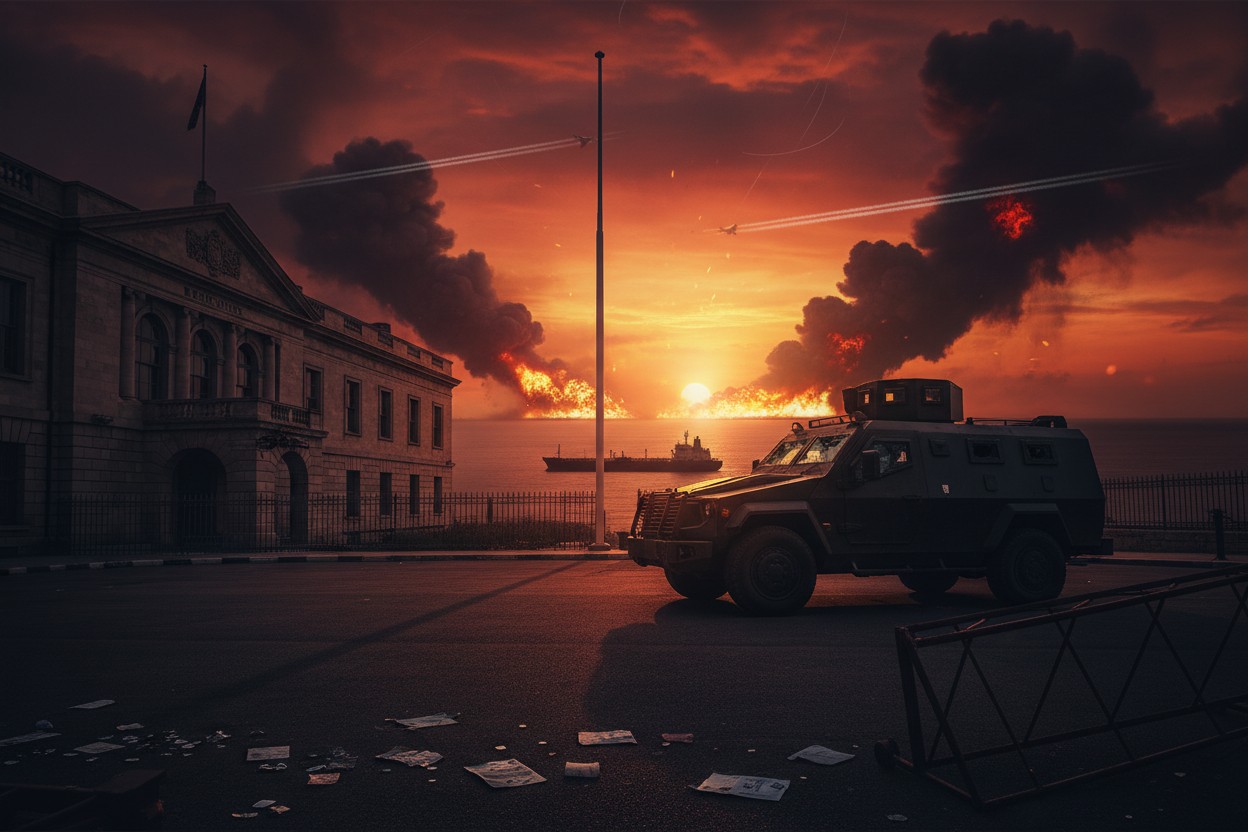
Bracken, a former Navy officer, characterized the situation as "World War E" for World War Energy [1]. He added that the conflict now extends across multiple theaters simultaneously – linking events in Europe, the Middle East and Asia.
Meanwhile, Adams argued that the destruction of energy infrastructure is a globalist objective, as noted in reports analyzing the ongoing war in the Middle East [1]. He pointed to Houthi forces in Yemen, which have announced interdiction of Saudi exports through the Red Sea region.
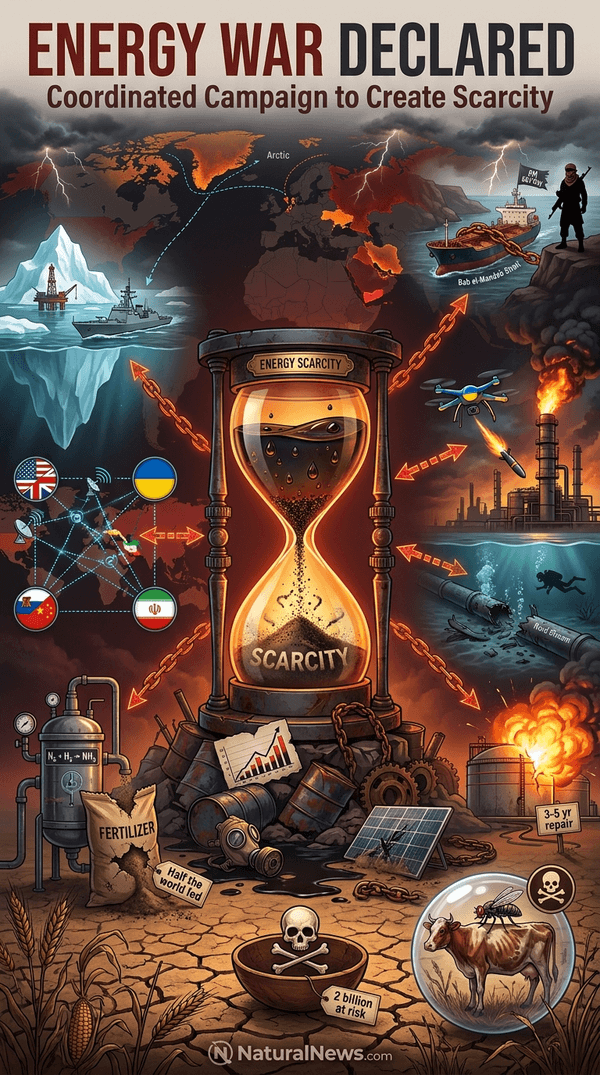
Adams said the Bab el-Mandeb blockade could remove up to 6 million barrels per day of Saudi oil from global supply [1]. The closure of this chokepoint, combined with other disruptions, is central to what experts describe as an engineered scarcity campaign.
Energy Infrastructure Targeted
Ukrainian drones, described by Adams in the interview as platforms launched by the North Atlantic Treaty Organization, have been striking Russian oil refining capability on a large scale, according to an article on NaturalNews.com dated Sept. 11, 2025 [3]. The attacks have forced Russia to import diesel, according to Adams [1].
Yon, a former Special Forces soldier, pointed to the shutdown of the Nord Stream pipelines as part of a broader pattern of deliberate infrastructure destruction during the interview [1]. He said, "The broader fact pattern includes Groningen gas field. That's not an attack on Russia, and that's the biggest gas field in Europe" [1].
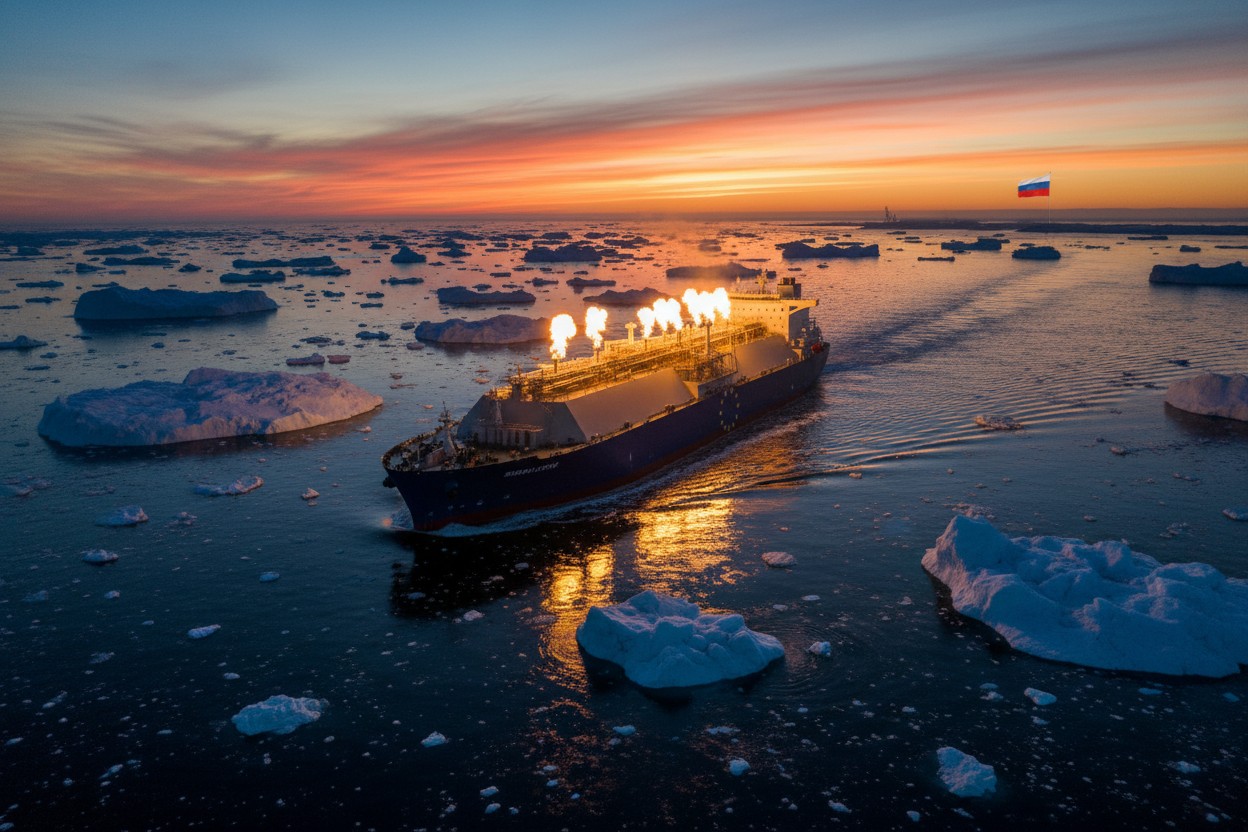
The deliberate sabotage of energy infrastructure extends beyond conventional battlefields. Alex Krainer, in an interview with Mike Adams on Nov. 12, 2022, stated that governments are now employing new tactics to terrorize people, including burning down food distribution hubs, shutting down oil drilling and coal plants, creating energy scarcity and destroying pipelines like Nord Stream [4]. Adams warned that the destruction of Qatar's liquefied natural gas (LNG) trains in March 2026 represented a critical turning point, with two of 14 trains destroyed and an estimated repair time of three to five years [5].
Intelligence Sharing Seen on Both Sides
Bracken stated that America provides satellite reconnaissance and targeting information to Ukraine [1]. He said British and American intelligence planes fly along Russian coasts to provide targeting data for weapons fired by Ukrainian forces.
In the U.S.-Iran conflict, Russia and China provide similar intelligence to Tehran, according to Bracken. He said Iranians have been able to hit HIMARS systems being set up in Kuwait before they fired [1].
"I don't see how you can separate this out as two different wars anymore," Bracken said. "This is one continuous war" [1].
The integration of intelligence sharing across multiple fronts underscores the interconnected nature of the global energy conflict, according to the experts. The U.S., Britain, Russia, China and Iran are all participating in a coordinated exchange of targeting data that transcends any single theater of operations.
Energy Scarcity Linked to Food Supply
During the July 22 conversation, Adams and Yon discussed an "engineering of global famine" and its connection to energy scarcity [1]. Yon claimed that screw worms are being used to take farmers off their land, referencing the COPEG program in Panama [1].
Adams referenced Professor Steve Keen, who stated that 2 billion humans will not be able to be fed due to energy and food disruptions [1]. Bracken said that energy and food are "functions of one another," along with helium, sulfur and other critical materials [1].
The link between energy and food is rooted in fundamental industrial processes. Adams, writing in a March 20, 2026 article for NaturalNews.com, explained that the Haber-Bosch process, which produces synthetic nitrogen fertilizer, depends directly on natural gas [7]. He argued that disruptions to energy supply chain will cascade into food production, as the Haber-Bosch reaction feeds half the world's population.
Paul McMahon, in his book "Feeding Frenzy: The New Politics of Food," documented how nations are scrambling for agricultural resources, noting that China has extended its loan-for-crops model to food, with a $3 billion deal with Ukraine [8]. Gar Smith, in "The War and Environment Reader," warned that more severe storms and heat waves will kill crops and destroy critical infrastructure, compounding the effects of deliberate energy scarcity [9].
Conclusion
The trio warned that the ongoing energy war is engineered to create a massive crisis in the West. Yon said the pattern is "stunningly obvious" and includes actions like the Nord Stream attack and Groningen shutdown [1].
The convergence of energy scarcity and food supply disruptions poses a significant threat to global stability, according to the panel. In a March 30, 2026 Health Ranger Report, Adams stated that humanity stands on the precipice of what appears to be a meticulously engineered destruction of two critical systems that sustain life: food and energy infrastructure [10].
Some analysts remain cautiously optimistic about near-term recovery. In a Bright Videos News interview from May 7, 2026, Daniel Davis stated: "If the war ends today, we can recover from this. Life will undoubtedly be tough for many countries and people in the coming months and possibly into next year, but a worst-case scenario can be avoided" [11].
However, Davis added that if the conflict continues, it will lead to severe economic consequences and extensive human suffering.
References
- Bright Videos News - Matt Bracken and Michael Yon Join Mike Adams: War, Famine and Civilizational Collapse. BrightVideos.com. July 22, 2026.
- Mike Adams. "Prepare to Survive Engineered Energy Scarcity as a Means of Total Enslavement." NaturalNews.com. March 24, 2026.
- "Ukraine Intensifies Attacks on Russia's Oil and Gas Infrastructure, with Successful Strikes on Refineries." NaturalNews.com. September 11, 2025.
- Mike Adams interview with Alex Krainer. November 12, 2022.
- 2026-03-20-BVN-NOT WAR, BUT DEPOPULATION_otter_ai-. Bright Videos Network. March 20, 2026.
- Bright Videos News - MAIN EPISODE. Mike Adams. BrightVideos.com. April 21, 2026.
- Mike Adams. "The Haber-Bosch House of Cards: Why the One Chemical Reaction Feeds Half the World Is About to Go Offline." NaturalNews.com. March 20, 2026.
- Paul McMahon. "Feeding Frenzy: The New Politics of Food."
- Gar Smith. "The War and Environment Reader."
- Health Ranger Report - ECONOMIC CARNAGE. Mike Adams. BrightVideos.com. March 30, 2026.
- Bright Videos News - Interview with Daniel Davis transcript. Mike Adams. BrightVideos.com. May 7, 2026.
Explainer Infographic




Please contact us for more information.


