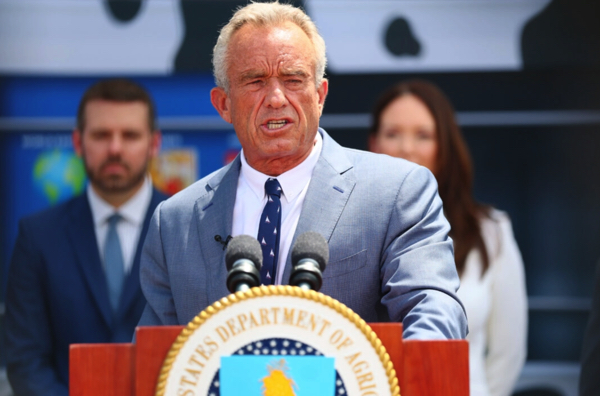
- Health Secretary Robert F. Kennedy Jr. proposed $5 billion in NIH funding to study vaccine-autism links, later dropped after agency resistance.
- Kennedy sought to eliminate the entire childhood immunization schedule, settling for removing vaccines for six of 17 diseases.
- Internal documents show Kennedy relied on longtime activist Stefanie Spear and vaccine litigation attorney Aaron Siri for policy direction.
- Federal courts have blocked key vaccine policy changes, while Kennedy faces ongoing legal challenges from medical groups.
- Reuters investigation reveals Kennedy met with Trump every few months, with the president encouraging continued vaccine safety research.
The quiet revolution in vaccine policy
In a series of previously undisclosed actions that have reshaped American public health policy, U.S. Health and Human Services Secretary Robert F. Kennedy Jr. has waged an intensive, behind-the-scenes campaign to fundamentally alter the nation's approach to childhood vaccinations since taking office in early 2025. According to interviews with 16 current and former officials, Kennedy—who agreed to avoid public vaccine discussions at White House request—has pursued an ambitious agenda including proposed $5 billion research into vaccine-autism links, efforts to eliminate the entire childhood immunization schedule, and systematic overhaul of vaccine injury compensation programs. The revelations, detailed in a comprehensive Reuters investigation, illuminate the scope of Kennedy's transformation from anti-vaccine activist to the most powerful public health official in the United States.
The autism research quest: $5 billion and counting
Kennedy's most audacious proposal came early in his tenure when he approached NIH Director Jay Bhattacharya with a request for $5 billion to study potential links between vaccines and autism—more than one-tenth of the agency's annual budget. The health secretary ultimately abandoned the plan after Bhattacharya convinced him the NIH had already committed $50 million to autism causation research launched in September 2025.
The push for vaccine-autism research has been central to Kennedy's mission. In November 2025, he ordered the CDC to revise its autism webpage, replacing language stating "studies have shown there is no link" with wording that the blanket denial was "not an evidence-based claim." Kennedy has tasked his closest adviser, Stefanie Spear—an environmental activist with no scientific background who serves as his primary gatekeeper—with leading HHS efforts to unearth evidence of vaccine injuries.
The FDA initially refused Spear's requests for access to the Sentinel BEST safety database, which tracks medical records of more than 100 million Americans, concerned the administration was on a "fishing expedition" to support predetermined conclusions about vaccine-autism links.
The childhood schedule: From elimination to reduction
Perhaps Kennedy's most consequential battle involved the recommended childhood immunization schedule, which guides state vaccination requirements and insurance coverage. Multiple administration officials revealed that Kennedy and Spear initially proposed eliminating the entire 17-disease schedule entirely, replacing it with "shared clinical decision-making" between parents and physicians.
The proposal alarmed then-FDA Commissioner Marty Makary and deputy Tracy Beth Høeg, who created a list of "core essential vaccines" to steer the health secretary away from what they viewed as an extreme position. Kennedy ultimately settled for reducing the schedule, targeting Denmark's more limited immunization program as a model. The health secretary and his advisers debated removing the MMR and polio vaccines, abandoning those plans due to potential political blowback during a measles outbreak in South Carolina and White House opposition.
In January 2026, Kennedy unilaterally removed vaccines for six diseases from the schedule, bypassing the traditional expert panel process. Federal courts blocked the changes in March, ruling Kennedy's vaccine advisory board was unlawfully constituted. HHS has appealed.
The Siri connection: Litigation strategy meets policy
Kennedy has relied heavily on vaccine litigation attorney Aaron Siri, who participates in internal HHS policy meetings via speakerphone and whose input Kennedy reportedly required for any vaccine-related policy changes. Siri, who represents over 400 pending vaccine injury claims, has argued that removing routine vaccine recommendations would allow families to sue drugmakers directly rather than through the limited Vaccine Injury Compensation Program.
Siri's firm has petitioned Kennedy to add more than 300 injury types to VICP, including several autism-related conditions. Legal experts note that Kennedy's policy changes could directly benefit Siri's law practice by enabling thousands more claims and mandated attorney fees from the compensation fund.
The White House has insisted Kennedy take no further vaccine actions ahead of the November midterm elections, fearing political damage to Republican candidates. HHS has pivoted to food policy initiatives and childhood disease treatments as alternative priorities.
The unfinished revolution
The Reuters investigation reveals a health secretary who has fundamentally altered the terms of America's vaccine debate, moving from activist outsider to the highest levels of federal power. Kennedy has pushed through major changes—including withdrawing funding from international vaccine alliances, winding down mRNA vaccine development and tightening COVID shot access—while facing sustained resistance from career officials, federal courts and White House strategists concerned about electoral consequences.
The long-term impact of Kennedy's tenure remains uncertain. Federal courts have blocked his signature childhood schedule changes, and his vaccine advisory board faces legal challenges over its composition. Yet Kennedy appears to retain President Trump's support, meeting every few months to discuss vaccine safety research and autism causation studies. As midterm elections approach, the health secretary's legacy will be measured not only by policy changes implemented but by whether his efforts to reshape public understanding of vaccine safety survive judicial review and political transition.
Sources for this article include:










Please contact us for more information.