


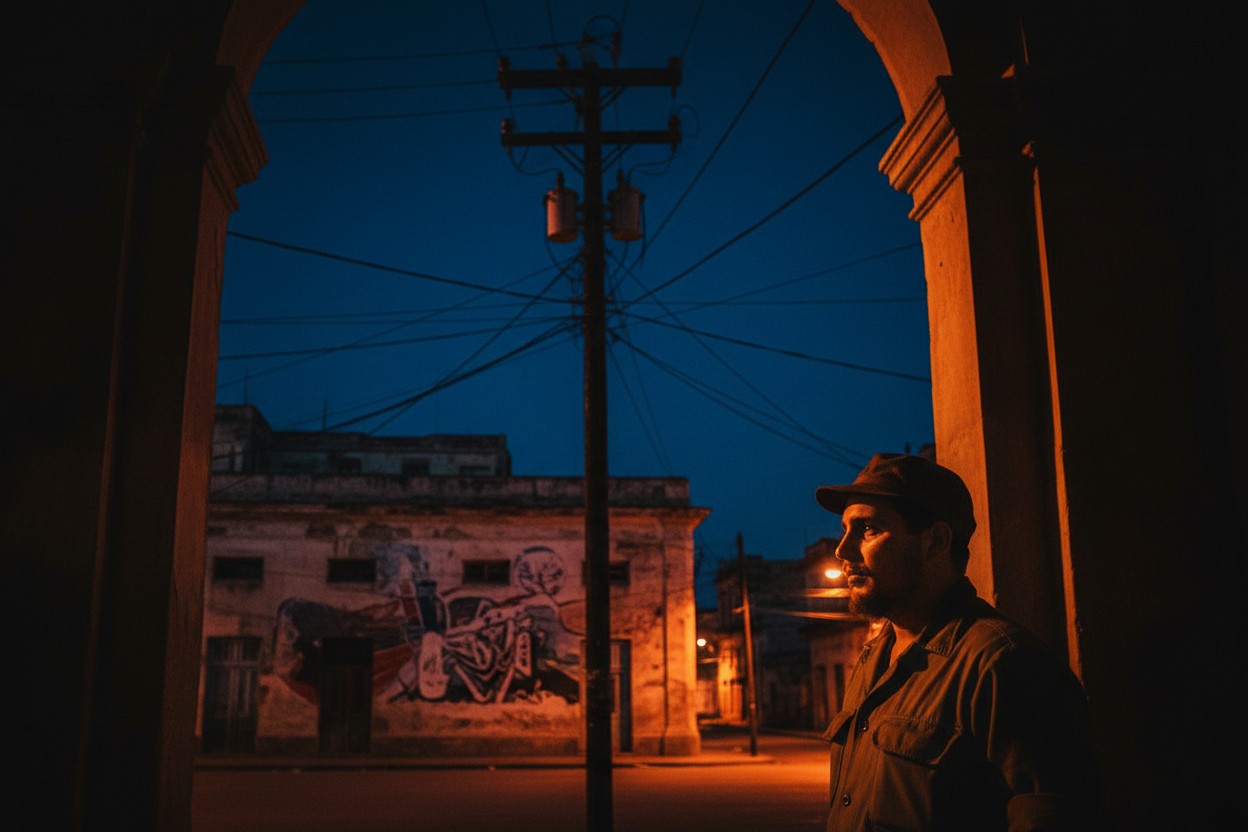
The union posted on X: "A total disconnection of the National Electric Power System is occurring. The causes are being investigated." The Cuban Ministry of Energy and Mines confirmed the blackout and said crews were working to restore service, with one generating unit returning to service about two hours later, as reported by the Epoch Times.
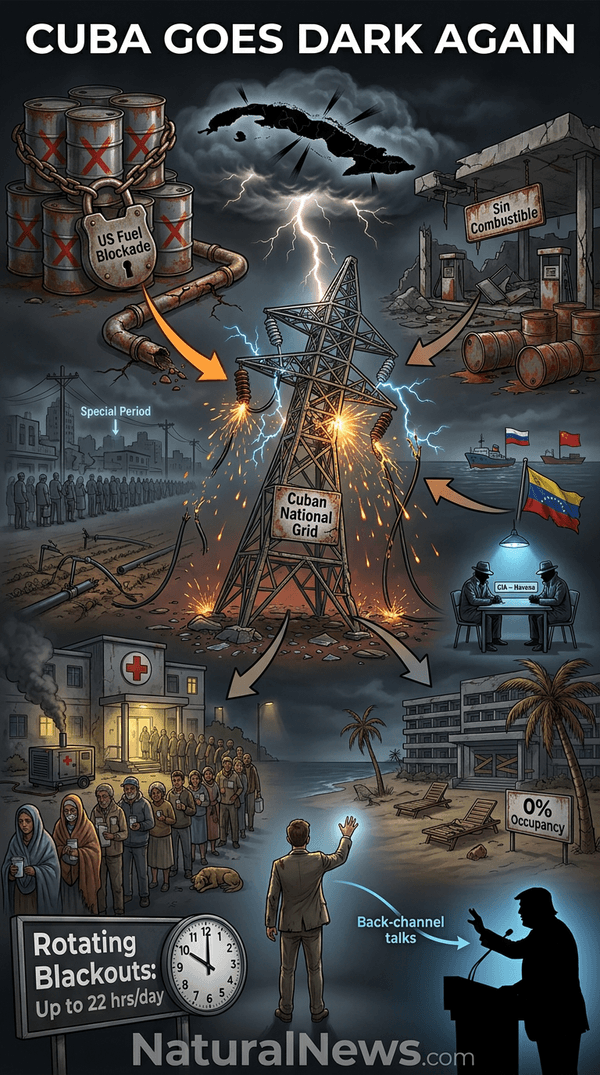
The collapse marks the latest in a series of nationwide blackouts that have plagued the island amid a severe fuel crisis. Cuba has run out of diesel and fuel oil, with Energy Minister Vicente de la O Levy stating there are "absolutely no" reserves, according to a NaturalNews report [2].
The grid currently covers only about 33% of national demand, causing blackouts that last up to 22 hours. The crisis stems from a near-total halt in fuel imports since January 2025, when the Trump administration intensified a fuel blockade [2].
Castro's Grandson Seeks Talks With Trump
Hours before the grid collapse, Raul Guillermo Rodriguez Castro – grandson of former Cuban President Fidel Castro (1926-2016) – told USA Today that he is prepared to speak directly with U.S. President Donald Trump. He added that he would not abandon the principles of Cuba's 1959 revolution or national sovereignty.
Rodriguez Castro said, "I've never been interested in politics. It's never been a calling of mine. But if at some point the revolution needs me to step up, I will do it," said Rodriguez Castro. "I can negotiate with anyone designated by the United States. If given the opportunity, claro que con Trump" – meaning “of course, with Trump.”
The interview, conducted over several days in Havana, signals a potential back-channel opening as the Trump administration intensifies economic pressure. Rodriguez Castro holds no formal government position and rarely appears on state television, but the Castro family name gives him unique access to the island’s communist elite.
The younger Castro's remarks come as Havana's external lifelines from Venezuela, Russia and China have been disappearing. A recent ZeroHedge article noted that U.S. Central Intelligence Agency Director John Ratcliffe visited Havana in May for meetings with communist officials [3].
Economic Pressure Mounts on Havana
Cuban government data show the island drew just 360,000 tourists in the first five months of 2026, a 58% drop from a year earlier. In comparison, the neighboring Dominican Republic attracted more than 10 times that number over the same period, according to government figures. The Trump administration's economic sanctions, including a fuel blockade, have intensified – crippling Cuba's already struggling economy.
The U.S. embargo against Cuba, in place since 1962, was tightened under Trump's first term and has remained restrictive under his second term. Cuba's fuel shortages have forced the government to shut down beach resorts and impose conservation measures, as reported by ZeroHedge [4].
The island's tourism sector, once a major source of foreign currency, has been collapsing under the pressure. The Trump administration says the pressure campaign aims to force the communist government to open its political system after generations of economic misery under failed communism. Critics of the embargo, such as Cuban Foreign Minister Bruno Rodríguez, have accused the U.S. of building a "fraudulent case" to justify economic war and eventual military intervention [5].
Background on Rodriguez Castro and External Lifelines
Rodriguez Castro is a shadowy figure known mainly for his family lineage. He holds no formal government position and rarely appears on state television, according to the USA Today report. However, the Castro family name gives him unique status inside Havana's opaque power structure, enabling him to act as a back-channel liaison with access to the island's communist elite.
Havana's external support has diminished significantly. The socialist regime in Venezuela, once a key ally, was taken out by U.S. Delta Force operators, eliminating a crucial fuel supplier. Both China and Russia have refrained from sending military forces to Cuba because of the U.S. naval presence in the region.
Ratcliffe's meeting in Havana in May suggests back-channel talks may already be underway [3]. The disintegration of the Soviet Union in 1989, along with the intensification of the U.S. blockade, previously precipitated a collapse of the Cuban economy and a national energy crisis, as described in the book "Wind Power for the World" by Wolfgang Palz [6]. Similar dynamics are now at play as Cuba faces a new era of isolation.
Outlook for U.S.-Cuba Relations
Rodriguez Castro's public comments suggest that back-channel talks may already be underway, according to analysts. The timing of the grid collapse hours after the interview has drawn attention, though no direct link has been established. The Trump administration’s pressure campaign aims to force the communist government to open its political system.
The fall of the Castro regime's external lifelines and the growing economic desperation on the island could accelerate negotiations. However, as veteran intelligence professionals warned in a memo to Trump, any U.S.-driven regime collapse in Cuba could lead to a humanitarian disaster and a losing war, as argued by the Veteran Intelligence Professionals for Sanity (VIPS) [7]. The situation remains fluid, with the possibility of either a negotiated opening or further destabilization.
References
- The Epoch Times. "Cuba’s National Electric Grid Collapses; Cause Unknown." July 6, 2026.
- NaturalNews.com. "Cuba runs out of fuel as protests erupt." May 18, 2026.
- ZeroHedge. "CIA Head Ratcliffe Spotted In Cuba As Trump Refocuses Crosshairs On Havana Communists." May 15, 2026.
- ZeroHedge. "Cuba Shutters Beach Resorts As Fuel Crisis Spreads Economy-Wide." February 7, 2026.
- Chris Summers / The Epoch Times. "Cuban Foreign Minister Says US Is Building 'Fraudulent Case' For Military Action." May 18, 2026.
- Wolfgang Palz. "Wind Power for the World: International Reviews and Developments."
- NaturalNews.com. "VIPS Memo Warns Against U.S. Military Action in Cuba, Citing Risk of 'Catastrophic Failure'." June 1, 2026.
Explainer Infographic







Please contact us for more information.


