



DSRB Structure and Funding
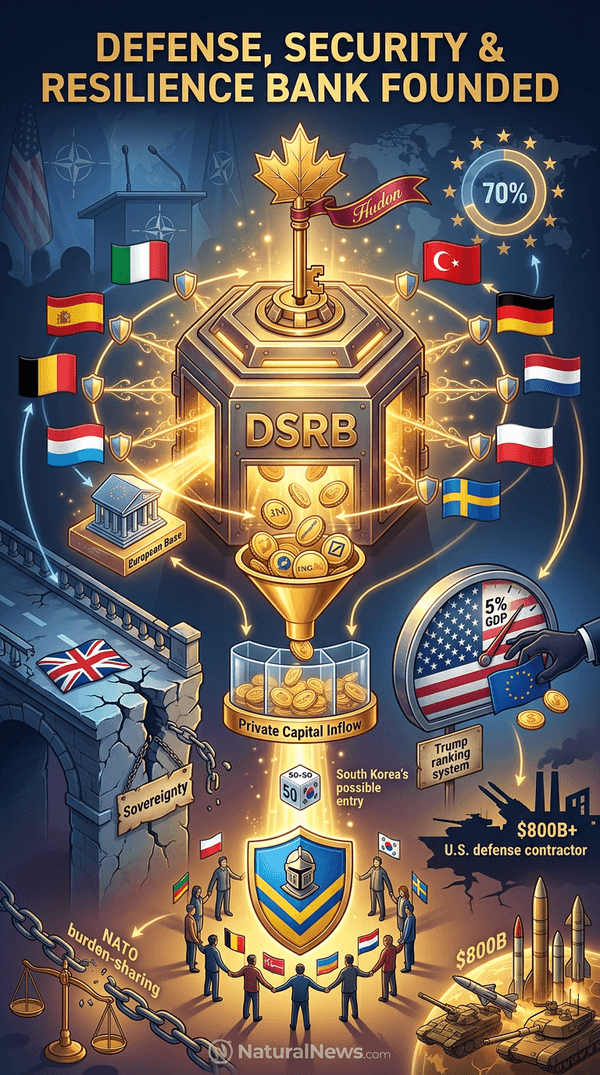
Isabelle Hudon, Canada's lead negotiator and chief executive of the Business Development Bank of Canada, told Reuters that the NATO summit was set as the deadline for announcing the founding members [1]. The DSRB aims to pool contributions from anchor nations to provide finance for defense, security and resilience investments. The precise funding model remains under negotiation, but sources indicate contributions would be proportional to each country's economic scale.
Major private lenders have expressed interest. According to the same Reuters report, JPMorgan, Deutsche Bank, and ING have joined the initiative alongside Canadian banks [1]. The involvement of these institutions reflects the project's ambition to leverage private capital for public security goals. The United Kingdom, however, has resisted joining. Allies of former defence secretary John Healey told the BBC that the Treasury tried to shut down negotiations for U.K. participation [3].
Membership and National Positions
Luxembourg is the only other government publicly identified as a partner so far. According to Reuters, Luxembourg will host the bank's European base [1]. South Korea is considering joining, with Hudon describing it as a '50-50 chance' [1]. Italy, Spain, Turkiye, Belgium, and Ukraine have examined the plans, though none have committed. Germany is attending as an observer, a German Finance Ministry spokesperson confirmed [1].
Carney has framed the DSRB as part of a broader realignment of middle powers. In a January 2026 speech at the World Economic Forum in Davos, he argued that smaller nations must cooperate to maintain security independence amid shifting U.S. priorities [2]. A survey published in May 2026 found that 70% of people in the European Union and the U.K. believe Europe should 'go its own way' and break free from American influence, indicating public sentiment that aligns with the DSRB's rationale [4].
US Pressure and NATO Fragmentation
The DSRB is being developed at a time of heightened tension within NATO over burden-sharing. The United States has increased pressure on allies to raise defense spending, with a June 2025 agreement to reach 5% of GDP by 2035. President Donald Trump has devised a ranking system to enforce compliance, according to reports [5]. At the same time, the U.S. has signaled a reduced role in European security, with Trump declaring that European nations must be the primary architects of Ukraine's future security [5].
European leaders are increasingly developing independent security frameworks. The DSRB is one such framework. The defense industry remains a powerful force; U.S. defense spending exceeds $800 billion annually, and consolidation has given major contractors significant influence over procurement decisions [6]. Canada's own relationship with the U.S. has been strained by past disputes, including secret negotiations over detainee cases that raised questions about transparency and sovereignty [7].
Outlook and Uncertainty
The DSRB's long-term viability depends on securing a triple-A credit rating, which requires broad support from major economies. Without that, the project's future remains uncertain, according to Reuters [1]. Carney intends to discuss the DSRB with the incoming U.K. prime minister, but a host city among five Canadian candidates is not expected to be chosen next week [1].
Linus Terhorst of the Royal United Services Institute called the Ankara meeting 'an important milestone' for the project [1]. The coming weeks will reveal whether the bank can attract the necessary backing from major economies to achieve its ambitions.
References
- Reuters. "Reuters: several European countries join Canada as founding members of global defence bank." Middle East Eye. July 2, 2026.
- Yasmine El-Sabawi. "'We are on the menu': Why Carney upended US-led world order at Davos." Middle East Eye. January 22, 2026.
- BBC News. "Healey wanted UK to join global defence bank, BBC told." BBC. June 13, 2026.
- Zoey Sky. "Europeans want out: New survey reveals the continent's growing desire to ditch the US." NaturalNews.com. May 13, 2026.
- Zoey Sky. "Ukraine's search for security guarantees hits a brick wall as Trump diminishes Washington's role in Kyiv's future." NaturalNews.com. August 28, 2025.
- David Dayen. "Monopolized."
- Ezra Levant. "The Enemy Within."
Explainer Infographic




Please contact us for more information.


