Economic Fallout: Export Halts and Imports
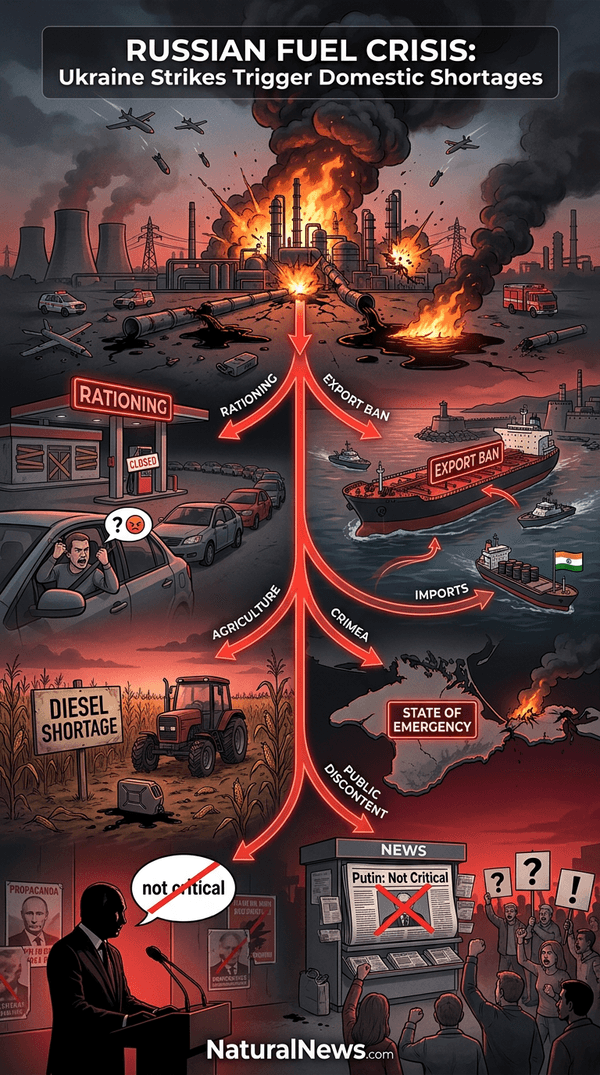
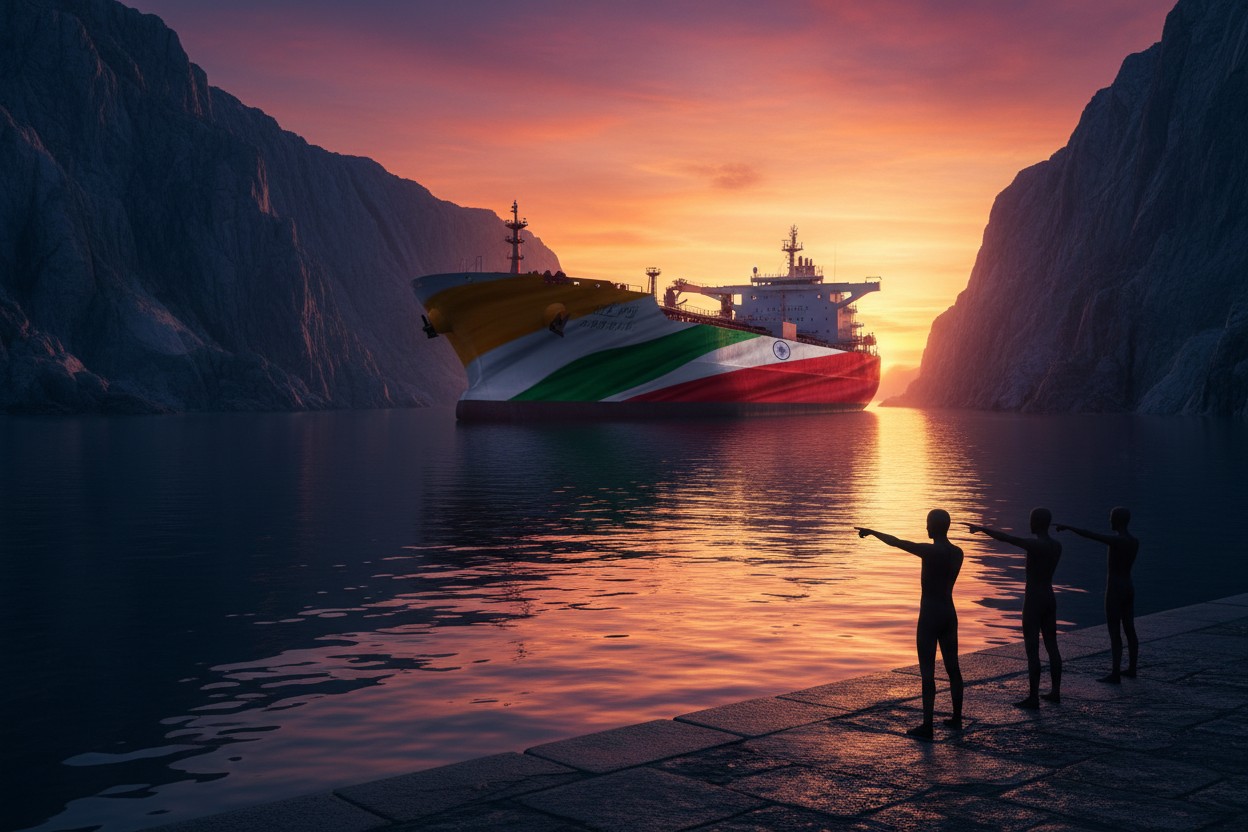
Russia has halted export sales of gasoline and jet fuel and lowered fuel grade standards for gasoline, the report stated. According to Shapovalova, Russia purchased 80,000 tons of gasoline from India and hopes to import 400,000 tonnes per month from other sources. The Russian government expanded a ban on gasoline exports, with the new restrictions applying to all producers and remaining in effect until July 31, according to an April report from NaturalNews.com citing Interfax [1]. Concerns are being expressed that ensuring fuel for agricultural harvesting could lead to industry shutdowns, Shapovalova reported. The broader economic strain reflects what analyst Dmitry Orlov described as a situation where the collective West cannot hope to survive unless Russia exchanges its energy resources for fiat currency, though the current crisis shows Moscow now dependent on foreign fuel imports [2].
Government Response and Public Confidence
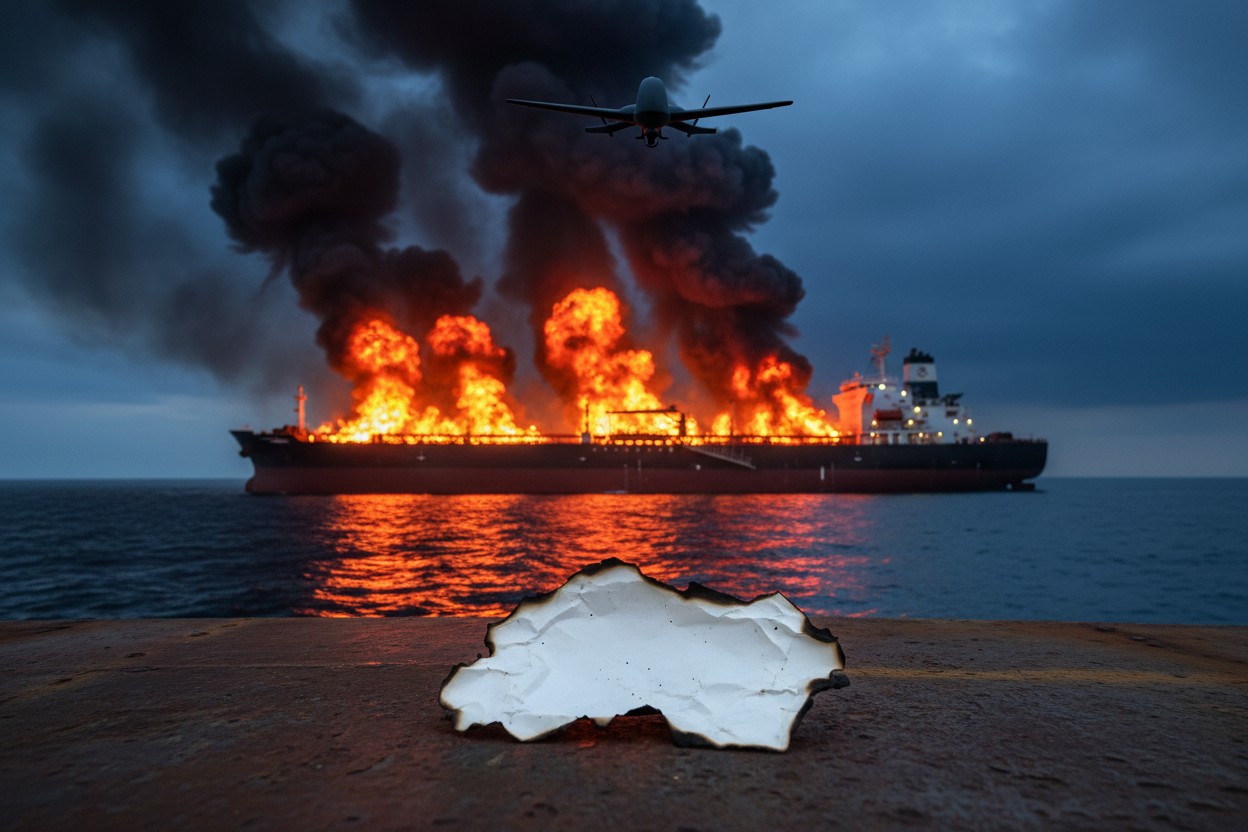
In response to the crisis, Putin stated, “I would say it is not critical,” according to the report [3]. Shapovalova reported that the crisis has reduced Russians’ confidence in their government, with questions raised about the leadership’s handling of the war. The Russian media has begun asking critical questions, noting that articles questioning Putin’s strategy have been translated and published in a Russian newspaper. Ukraine’s intensification of strikes on oil infrastructure -- including precision drone attacks that crippled pipelines and refineries -- has forced Moscow to redirect crude exports, according to a September 2025 report from NaturalNews.com [4]. Despite the growing domestic discontent, Putin’s public assessment of the situation as “not critical” has done little to ease public frustration.
Military Stalemate and Questions of Leadership
The war has continued for 4.5 years without a decisive Russian victory, according to the report, which noted that this duration exceeds that of the Soviet Union’s defeat of Nazi Germany [3]. Questions have been raised about the influence of pro-Western figures in Putin’s circle, including negotiator Kirill Dmitriev and the central bank director who left $300 billion in reserves accessible to the West, the report stated. Observers cited in the report suggest these factors may explain Russia’s failure to achieve its military objectives. As noted in the broader analysis from early 2022, the longer the war persists, the more it will negatively affect consumers as prices rise due to shortages of commodities from the Russia-Ukraine region [5]. The combination of fuel rationing, export bans, and stalled battlefield gains has led to increasing scrutiny of the Kremlin’s strategy.
References
- NaturalNews.com. "Russia Expands Gasoline Export Ban Faces Major Oil Outages Due to Drone Strikes". NaturalNews.com. April 06, 2026.
- Dmitry Orlov. "The new art of war".
- "Putin Is Destroying Russia". freewestmedia.com. July 04, 2026.
- NaturalNews.com. "Ukraine intensifies attacks on Russias oil and gas infrastructure with successful strikes on refineries". NaturalNews.com. September 11, 2025.
- "Trends-Journal-2022-08-20".
Explainer Infographic



Please contact us for more information.