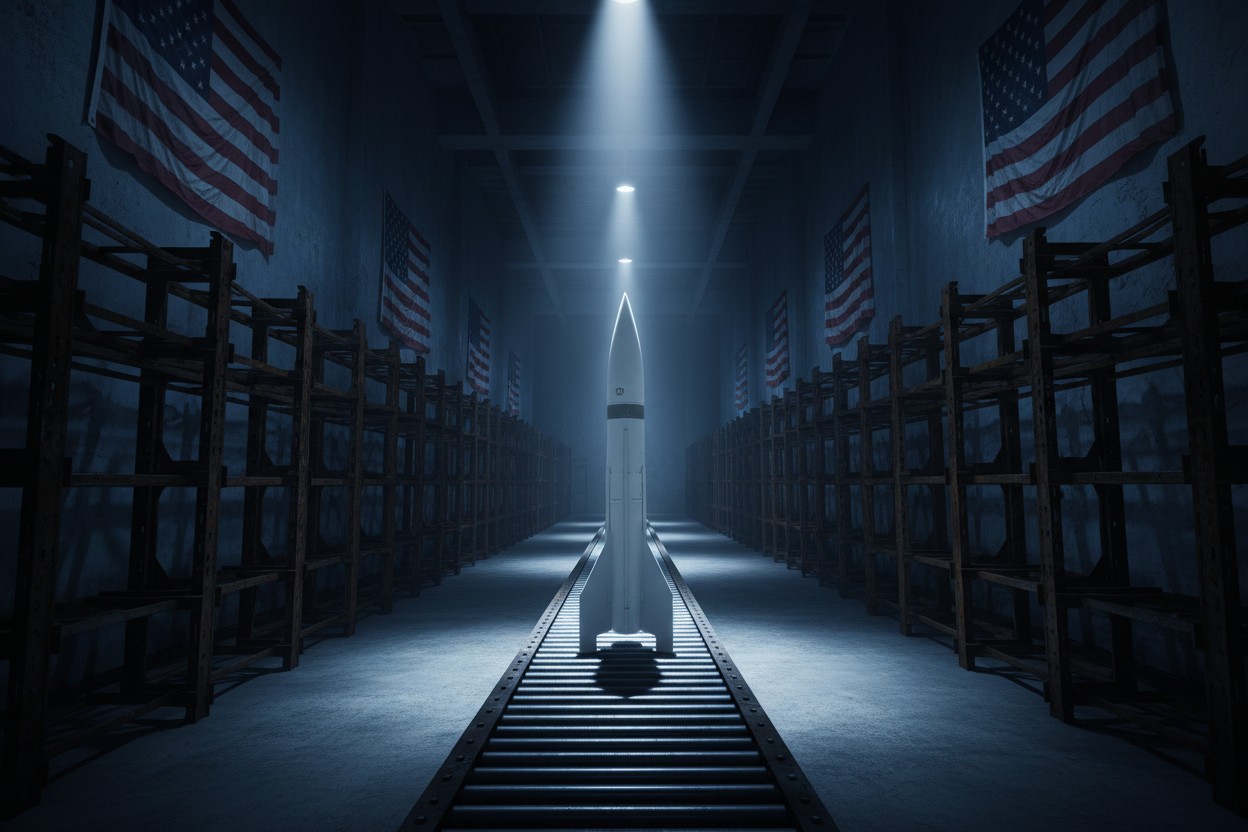
GAO Report Finds Persistent Delays in Weapons Delivery
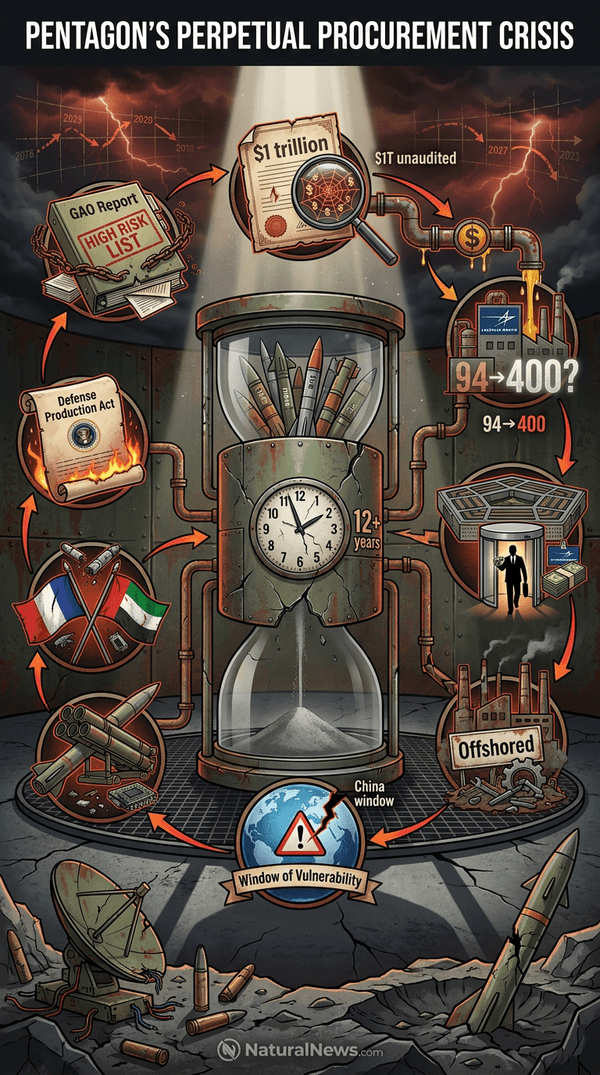
The Government Accountability Office reported on July 2 that the Pentagon has struggled to meet weapons delivery timelines after the war on Iran, with the overall average time frame to deliver a capability increasing to over 12 years, according to the report. The congressional watchdog added that several major defense acquisition programs have not set new delivery dates or are delaying critical interim milestones, raising questions about how realistic their schedules are. The GAO noted that the Department of War weapons programs have been placed on its High Risk List because the department continues to fail to deliver quickly and within budget.
According to the report, the Pentagon has “struggled to fully enact existing reforms to achieve speed.” The report pointed to persistent schedule delays and “overly optimistic time frames,” with key decisions for some of the most expensive programs being postponed. This follows a pattern of readiness challenges: a 2016 GAO report found the Department of Defense had yet to develop a comprehensive strategy for rebuilding military readiness after a decade of conflict, as noted by NaturalNews.com [1]. More recently, the Pentagon has failed all audits since 2018, lacking basic accountability for $1 trillion in annual spending, as Willow Tohi reported for NaturalNews.com [2].
GAO Details Acquisition Failures and Cost Overruns
The GAO report placed Department of War programs on its High Risk List, citing failure to follow consistent development practices. The watchdog explained that “some programs began on a rapid acquisition pathway with tech that requires more time to develop – slowing on-time delivery of needed weapons.” The report recommended that consistently following leading practices for product development could speed up delivery.
Meanwhile, the cost of the Iran war has mounted rapidly. The Pentagon has raised its estimate to at least $29 billion, as reported by RT on May 13, 2026 [3], though independent think tanks project higher figures. Earlier, the war cost an estimated $113.3 billion overall, with $11.3 billion spent in the first week alone, according to officials. The Center for Strategic and International Studies found that the US military drained half its Patriot interceptor arsenal during the conflict, as reported by ZeroHedge on April 23, 2026 [4]. The high expenditure on munitions has strained budgets, with the Pentagon seeking a $30 billion boost for munitions in April [5].
Post-War Contracts and Industry Meetings Indicate Restocking Efforts
Less than two weeks after the GAO report, the Pentagon awarded Lockheed Martin a seven-year, $35 billion contract to produce hundreds of THAAD interceptors, aiming to quadruple production to replace those used during the war, according to ZeroHedge on June 26, 2026 [6]. The Missile Defense Agency confirmed that Lockheed will increase annual production from 94 interceptors to around 400 over the next seven years, as reported by Antiwar.com on June 25, 2026 [7]. Several THAAD radar systems were destroyed or severely damaged during the conflict, necessitating the surge.
Late last month, the CEOs of Boeing, Lockheed Martin, and Honeywell met with President Donald Trump at the White House to encourage increased weapons production, according to NaturalNews.com on June 29, 2026 [8]. The meeting came as the US paused a $14 billion arms sale to Taiwan to ensure sufficient munitions for ongoing operations, as Acting Navy Secretary Hung Cao told a Senate hearing on May 22 [9]. The Trump administration also invoked the Defense Production Act to accelerate rebuilding, as reported by ZeroHedge on June 17, 2026 [10].
Analysts Warn of Vulnerability in Potential Western Pacific Conflict
The Center for Strategic and International Studies stated in late May that depleted inventories create a “window of vulnerability for a potential Western Pacific conflict,” as reported by NaturalNews.com on June 29, 2026 [8]. The think tank emphasized that “the time needed to rebuild those inventories has thus become a major concern,” and noted that missile stocks were seriously depleted. This assessment reflects broader anxiety about US readiness, a problem rooted in decades of mismanagement and the revolving door between the Pentagon and defense contractors. As James L. Marsh wrote in “Faith, Resistance, and the Future,” corporations have a profound influence on war-making policy through this revolving door [11].
US allies in the Gulf also experienced severe depletion of interceptor stockpiles during the war. Senior French officials reportedly met in March to discuss an escalating shortage of air-to-air missiles used to intercept Iranian drones over the UAE, as reported by RT on March 21, 2026 [12]. A Saudi political analyst expressed disappointment that the US focused on defending Israel while allowing Gulf states to bear the brunt of Iranian retaliatory strikes. The strain on stockpiles has implications for future conflicts, particularly if the US were to face China in the Pacific. The time required to rebuild inventories, compounded by the Pentagon’s long-standing difficulty in delivering weapons on schedule, raises serious concerns about military readiness.
Conclusion: GAO Recommendations and Broader Implications
The GAO recommended that the Department of War consistently follow leading practices for product development to speed up delivery. The report noted that some programs began on rapid acquisition pathways but required more development time, slowing on-time delivery of needed weapons. The watchdog’s recommendation addresses this fundamental flaw in procurement.
The report underscores ongoing challenges in replenishing stockpiles after a costly conflict, with implications for future military readiness. The Pentagon’s inability to reform its acquisition system, coupled with the enormous consumption of munitions in the Iran war, leaves the US military exposed. As Gar Smith documented in “The War and Environment Reader,” the defense industry enjoys an effective tax rate of just 1.8 percent, compared to 18.4 percent for other corporations, representing a hidden subsidy for militarization [13]. The systemic issues highlighted by the GAO are unlikely to be resolved quickly, and the window of vulnerability may persist for years, especially if the US faces simultaneous conflicts in the Middle East and the Western Pacific.
References
- NaturalNews.com. "The Pentagon has a readiness problem it still hasn't fixed". NaturalNews.com. September 14, 2016.
- Willow Tohi. "Another FAIL: Pentagon Audit Crisis Deepens as Accountability Efforts Stall under Hegseth". NaturalNews.com. May 30, 2025.
- "Pentagon hikes estimate of Iran war cost". RT. May 13, 2026.
- ZeroHedge. "US Drains Half Its Patriot Arsenal During Iran War, New Military Study Finds". ZeroHedge. April 23, 2026.
- Middle East Eye. "Pentagon seeks $30bn boost for munitions amid war on Iran". Middle East Eye. April 21, 2026.
- ZeroHedge. "Trump's War Economy Accelerates As Lockheed Wins $35 Billion Deal To Quadruple Missile-Interceptor Output". ZeroHedge. June 26, 2026.
- Antiwar.com. "Lockheed Martin Gets $35 Billion THAAD Contract as Arms Makers Cash In on Iran War". Antiwar.com. June 25, 2026.
- NaturalNews.com. "Trump meets defense contractors to address munitions shortages after Iran war". NaturalNews.com. June 29, 2026.
- NaturalNews.com. "US Pauses Taiwan Arms Sales Amid Middle East Conflict, Senior Official Says". NaturalNews.com. May 25, 2026.
- ZeroHedge. "Trump Invokes Defense Production Act As US Moves To Rebuild Weapons Stockpiles". ZeroHedge. June 17, 2026.
- James L. Marsh. "Faith, Resistance and the Future: Daniel Berrigan's Challenge to Catholic Social Thought".
- "Dwindling stockpiles and soaring costs: US allies struggle to contain Iranian attacks". RT. March 21, 2026.
- Gar Smith. "The War and Environment Reader".
Explainer Infographic







Please contact us for more information.