Key points:
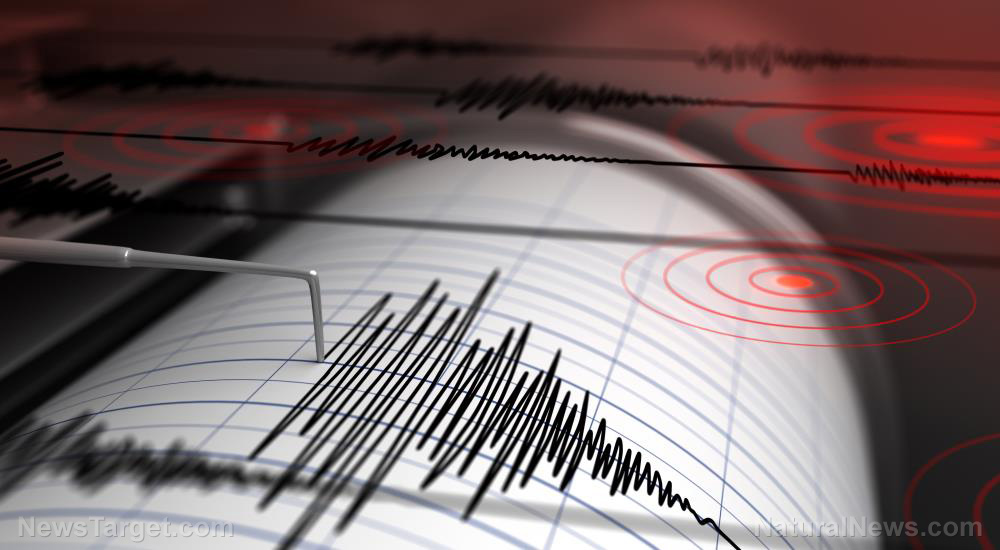
- Two earthquakes struck Caracas 40 seconds apart, a pattern inconsistent with natural seismic activity.
- At least 235 dead and 4,300 injured with 250 buildings damaged or destroyed.
- Survivors describe walls cracking, buildings collapsing, and a prolonged shaking unlike previous earthquakes.
- Historical context shows Caracas sits on a volatile tectonic boundary vulnerable to induced seismic activity.
- There is growing speculation that direct energy weapons now have the potential to penetrate the Earth's crust, triggering unnatural seismic events.
- Government officials have dismissed alternative explanations for the disaster's severity.
The shaking that defied nature
Verónica, a Caracas resident celebrating a national holiday with her mother, thought she was going to die when the walls of her apartment began to move. "I thought I was going to die," she told BBC Mundo, her voice captured in a breathy voice message that went silent for hours, leaving her journalist sister Valentina Oropeza frantically searching for answers.
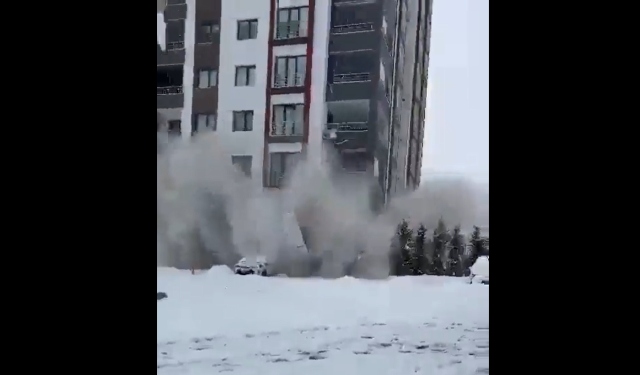
The building that once felt like a sanctuary became a tomb of cracked concrete and splintered rebar. "The building is completely destroyed, the walls are cracked," Verónica later confirmed. This experience was not isolated. Nicole Kolster, a BBC Mundo contributor in the Palos Grandes district, watched her seventh-floor windows begin to shake and had only moments to shelter between a front door and a stone wall. "I thought the building was going to fall on top of me," she said. Evacuating to the street, she heard voices coming from mountains of rubble, survivors too desperate to flee to pause and put on shoes, hugging and crying in the chaos.
The human toll tells only part of the story. Erica Sanchez, whose first-floor apartment was severely damaged, received devastating news from an engineer. "My building was hit pretty hard: the first floor was the worst affected, then the second floor, the third floor a bit, and from the fourth floor up — nothing," Sanchez explained to Sputnik. The engineer advised that "all the walls will have to be demolished." This pattern of damage, concentrated in lower floors with upper levels relatively untouched, mirrors the destruction seen in the 1967 Caracas earthquake that killed nearly 300 people. In that earlier disaster, new high-rise apartments collapsed, structures nearly identical to those being built in San Francisco near the San Andreas Fault. Seismologists rate the intensity expected from a major San Andreas quake as twice what occurred in Caracas, a sobering warning for American cities.
The technology of a potentially manufactured disaster
Behind the tragic stories of Juan Ortiz, a medical student who lost a close friend to the rubble, and Leander Pérez, who spent the night on pavement after his building's walls cracked and a bent security gate trapped him inside, lies a technology that few journalists dare to investigate. Directed energy weapons operate by transmitting concentrated electromagnetic or acoustic energy into the earth's crust. These devices can theoretically heat underground rock formations, alter pressure dynamics along fault lines, and trigger the release of accumulated tectonic stress in a controlled manner. The result is an earthquake that appears natural but follows a pattern of timing, intensity, and geographic targeting that nature rarely produces.
These theories were quickly debunked by AP fact checkers, after they began circulating on the Shawn Ryan Show and then the Joe Rogan Podcast. Those theories centered around the military's exploration of neutrinos deep inside the Earth at the South Pole. However, we are assured that no foul play is taking place and governments and other actors have no incentive to destabilize urban centers for regime change and/or political and economic control.
The Venezuelan quakes, arriving precisely 40 seconds apart, fit this pattern of manufactured disaster. Governments facing political opposition have been accused of using such technology to destabilize vulnerable nations, targeting densely populated urban centers, critical infrastructure, and regions where political dissent is strongest. The coastal state of La Guaira, the hardest hit region where "dozens" of buildings collapsed according to Interim President Delcy Rodríguez, is a strategic location for such an attack. Its proximity to Caracas, its role as a port and economic hub, and its dense population make it an ideal target for those seeking to maximize chaos and suffering. The 250 buildings damaged or lost, the flattened structures, the large fires, and the field hospitals overwhelmed with injured people are not merely the results of natural geology but potential evidence of a weaponized environment.
Direct energy weapons and neutrino theories need explored
The concept of earthquake machines is not science fiction but a documented area of military research. The High-frequency Active Auroral Research Program in Alaska, commonly known as HAARP, has been the subject of controversy for decades, with researchers demonstrating that electromagnetic waves can influence atmospheric and geological conditions. More advanced systems, using ground-based transmitters or satellite arrays, can focus energy on specific fault lines to induce seismic activity. In Caracas, the vulnerability is rooted in the city's location along the boundary between the Caribbean and South American tectonic plates, a zone where the constant grinding movement of the earth accumulates stress. A directed energy weapon could provide the trigger that nature holds back, releasing that stress in a catastrophic burst that destroys buildings, kills civilians, and destabilizes the government.
Venezuela's political turmoil, economic collapse, and social unrest make it a prime target for such operations. The systematic use of earthquake machines against vulnerable populations allows a foreign power to change a nation without deploying troops or firing conventional weapons. But this all theory; however, and more investigation is needed to understand direct energy weapons and earthquake machines.
Sources include:



Please contact us for more information.