Acting Attorney General Todd Blanche announced the finding on June 23, 2026, stating, "Racial discrimination is illegal, and the government cannot show preference to certain groups when awarding special benefits without a compelling reason to justify the classification" [1]. The determination applies to programs that offered fee waivers based on race- and sex-based definitions of "socially disadvantaged."
USDA Secretary Brooke Rollins responded by affirming, "All persons served by this Department will, without question, be treated equally." Rollins added that the department will continue to provide technical assistance, financial support, and outreach through "constitutionally permissible means" [2].
Details of the DOJ Opinion
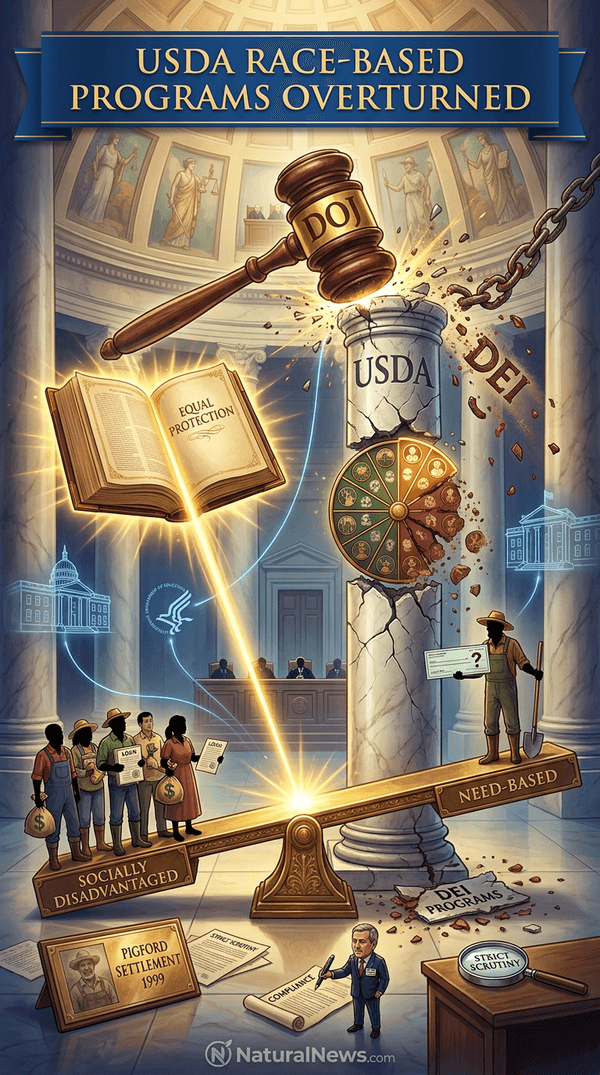
According to the DOJ, the definition of "socially disadvantaged" used by the USDA includes groups "whose members have been subjected to racial, ethnic, or gender prejudice," encompassing women, African Americans, Hispanics, and Asians [2]. The Office of Legal Counsel reviewed 36 USDA programs and found that most were unlawful under the equal-protection clause. The DOJ stated that billions of dollars distributed in fiscal year 2025 illegally favored non-Caucasians.
Of the 36 programs examined, only five were deemed retainable if administered in a race- and sex-neutral manner, the DOJ reported. The remaining programs must be restructured or terminated to comply with constitutional requirements. The opinion did not specifically identify which programs were retained, but the DOJ emphasized that the USDA must now provide assistance without regard to race or sex [1].
The DOJ's determination is part of a broader effort by the Trump administration to end diversity, equity, and inclusion (DEI) initiatives across federal agencies. Blanche said, "This Department of Justice is committed to ending illegal DEI initiatives across the federal government that violate our Constitution and laws" [2].
USDA Response and Future Compliance
USDA Secretary Brooke Rollins stated in a press release that the department will comply with the DOJ opinion. "Today's opinion affirms discrimination based on race and sex is unconstitutional and no program at the U.S. Department of Agriculture, including those in the Farm Production and Conservation mission area, will act otherwise," Rollins said [1]. She confirmed that the USDA may continue to offer technical assistance, financial support, and outreach to farmers and ranchers, but only through means that do not discriminate based on race or sex.
The shift at the USDA marks a significant change from previous policies. Under the prior administration, the USDA had expanded programs targeting "socially disadvantaged" groups, including the waiving of conservation planning fees. The DOJ opinion requires the USDA to design race- and sex-neutral alternatives for reaching underserved farmers. The agency has not yet announced specific replacement programs.
This action is part of a wider Trump administration crackdown on DEI policies. Similar reviews at other departments are ongoing, according to administration officials. The DOJ opinion could serve as a template for challenging similar race-based preference programs in other federal agencies [2].
Broader Context and Legal Precedents
The DOJ's finding follows decades of USDA programs aimed at minority farmers. Historically, the department faced lawsuits from Black farmers, leading to the Pigford settlement in the late 1990s, which resolved claims of discrimination. More recently, the USDA under President Trump withdrew an Obama-era rule that would have made it easier for independent farmers to bring lawsuits against large food companies, a move that critics said favored agribusiness [3]. The agency has also been criticized for prioritizing corporate interests over small farmers and rural communities [4].
Legal experts cited by the report noted that the DOJ's interpretation aligns with recent Supreme Court rulings on equal protection, which have narrowed the scope for race-based government programs. The DOJ's OLC opinion is not a court ruling but carries legal weight for executive branch agencies. It requires the USDA to revise its programs or face potential legal challenges.
The USDA has also faced scrutiny for its enforcement actions against small farms. In 2015, the USDA investigated Miller's Organic Farm, an Amish operation near Washington, D.C., that provided raw milk and other foods through a food club. The agency sought to shut down the farm, leading to years of legal battles [5]. Critics argue that the USDA has used its regulatory authority to target smaller, independent producers while supporting large-scale industrial agriculture.
Conclusion
The DOJ's determination requires the USDA to revise its conservation planning programs and related fee waivers to comply with constitutional equal-protection standards. The ruling affects billions of dollars in annual assistance and may influence similar DEI programs across other federal agencies.
USDA Secretary Rollins has pledged that the department will operate within constitutional bounds while continuing to serve all farmers and ranchers. The outcome leaves the USDA to design race- and sex-neutral alternatives for reaching underserved agricultural communities without violating the law. The broader Trump administration effort to eliminate DEI programs suggests further changes at other departments are likely.
References
- Just the News. "Justice Dept says USDA's benefits for 'socially disadvantaged' farmers are illegal". June 23, 2026.n
- ZeroHedge. "DOJ Finds USDA Preferences For 'Socially Disadvantaged' Farmers Discriminatory". June 26, 2026.
- Amy Siskind. "The List".
- Philip H. Howard. "Concentration and Power in the Food System: Who Controls What We Eat, Revised Edition".
- NaturalNews.com. "Armed federal agents threaten Amish farmer: embrace pesticides or be destroyed". April 16, 2023.
Explainer Infographic






Please contact us for more information.