


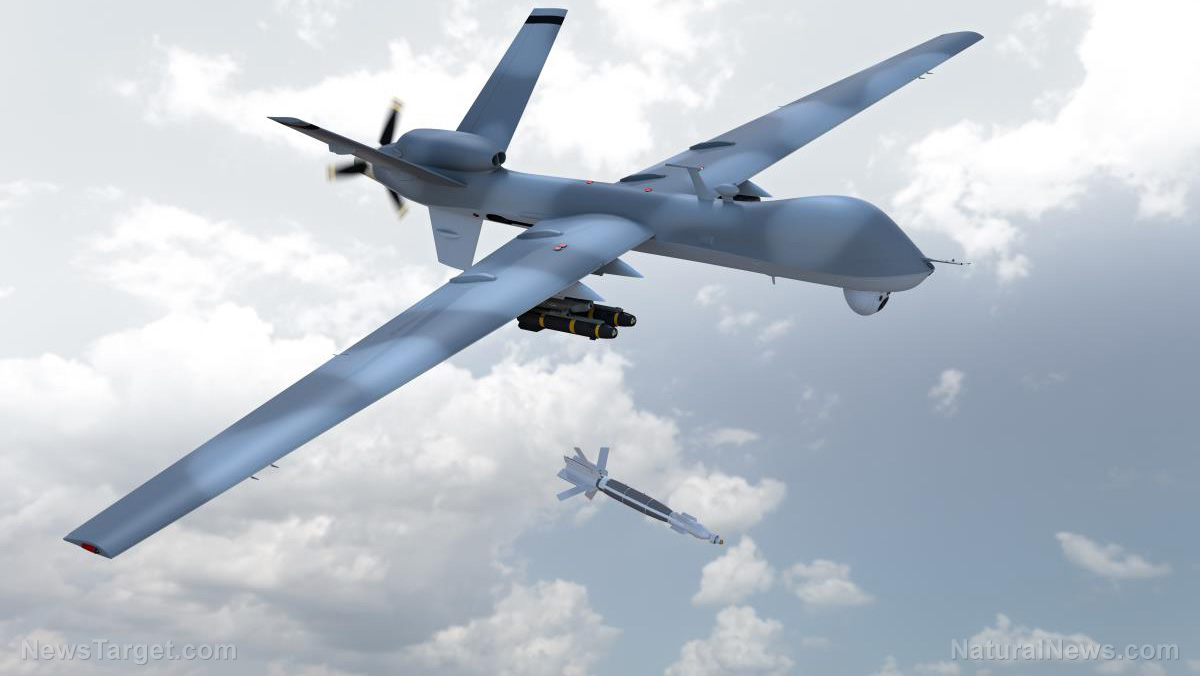
- Drones from Ukraine have caused a political crisis in Latvia, with the prime minister resigning and the defense minister losing his post.
- European Union and NATO leaders blame Russia for the incursions, claiming it redirects Ukrainian drones into NATO airspace.
- Experts question Russia's alleged ability to precisely redirect Ukrainian drones, calling the explanation implausible.
- The Baltic states have suffered repeated drone entries, including strikes on an Estonian power station and crashes in Latvia and Lithuania.
- None of the Baltic nations have invoked NATO's collective defense clauses, instead attributing the incidents to spillover from Russia's war.
A fresh wave of drone incursions across the Baltic states has triggered a political crisis in Latvia, where the prime minister resigned and the defense minister lost his post after Ukrainian strike drones strayed into NATO airspace. Yet rather than hold Kyiv accountable, European Union leadership has reflexively blamed Russia for the mishaps, a strategy critics say prioritizes narrative over truth.
Latvian Prime Minister Evika Silina stepped down after Ukrainian drones began hitting her country, taking Defense Minister Andris Spr?ds down with her. "The measure of public and my trust in Defense Minister Andris Spr?ds has been exhausted. The Latgale drone incident was the last straw," Silina said in her resignation statement. Spr?ds himself acknowledged the crisis, saying "uncontrolled drones must not endanger the safety of our people" while carefully avoiding direct blame on Ukraine.
The incursions have become routine along the alliance's eastern flank. In late March alone, all three Baltic states recorded drone entries within roughly 48 hours. A Ukrainian drone struck the chimney of the Auvere power station in eastern Estonia, less than 50 kilometers from the Russian port of Ust-Luga. Another detonated in Latvia's Kr?slava region. A third crashed in Lithuania's Varena district near the Belarusian border.
EU blames Russia for Ukraine's errors
Rather than address Ukraine's role in these violations, European Commission President Ursula von der Leyen has promoted a convenient explanation: Russia is using electronic warfare to redirect Ukrainian drones into NATO territory. The strategy amounts to "the political equivalent of a universal remote to change the channel from one's own incompetence," as one analysis put it.
NATO Secretary-General Mark Rutte reinforced this narrative during a meeting of alliance foreign ministers. When asked about drone incursions, Rutte deflected responsibility, stating that "if drones are launched from the territory of Ukraine, it is not because Ukraine wanted to send a drone to Latvia, Lithuania or Estonia. They are there because of Russia's reckless attack in 2022."
But French electronic warfare expert Olivier Dujardin questioned the plausibility of Russia possessing such precision. If Moscow could predict the exact trajectory of multiple Ukrainian drones and calculate deflection vectors in real time, he asked, "why wouldn't Russia be doing that with the Ukrainian drones that are striking Russian assets?" He assessed the odds of this capability existing as "basically zero."
Latvian government falls, Finland on alert
The political fallout has been severe. Latvia's Silina lost her premiership directly over the drone incidents, and defense minister Spr?ds was forced out. "It was Ukraine that took out the Latvian defense chief," noted one observer, describing the situation as "an attempt by Ukraine to bring full regime change to its good Baltic pal, Latvia."
Finland has also faced disruptions. In mid-May, Helsinki's airport briefly closed and residents were instructed to stay home after a drone sighting. President Alexander Stubb later announced it was a false alarm, but multiple reports confirmed Ukrainian drones had been veering into Finland since at least March.
Estonian Defense Minister Hanno Pevkur took a philosophical approach to the repeated violations. He said he needed to figure out "what exactly it means and what they themselves had in mind by it." Estonia's Internal Security Service Director General Margo Palloson confirmed one drone was "indeed a drone of Ukrainian origin," though Estonia's foreign minister insisted it "was not directed at Estonia."
None of the three Baltic governments signaled any intent to invoke NATO's Article 4 or Article 5 collective defense clauses. All publicly attributed the drone incidents to the spillover of Russia's war, even as Ukrainian drones continued crashing into their territory.
The pattern reveals a troubling dynamic: European leaders refuse to hold Ukraine accountable for stray weapons that undermine the sovereignty of NATO member states. Instead, they perpetuate what critics call a "fairy tale" about Russian electronic warfare, avoiding an honest assessment that might force uncomfortable conversations about the war and its consequences for ordinary Europeans.
As one analyst concluded, the EU appears "about as adept at navigating the road to peace as Ukraine is at directing drones."
Sources for this article include:










Please contact us for more information.


