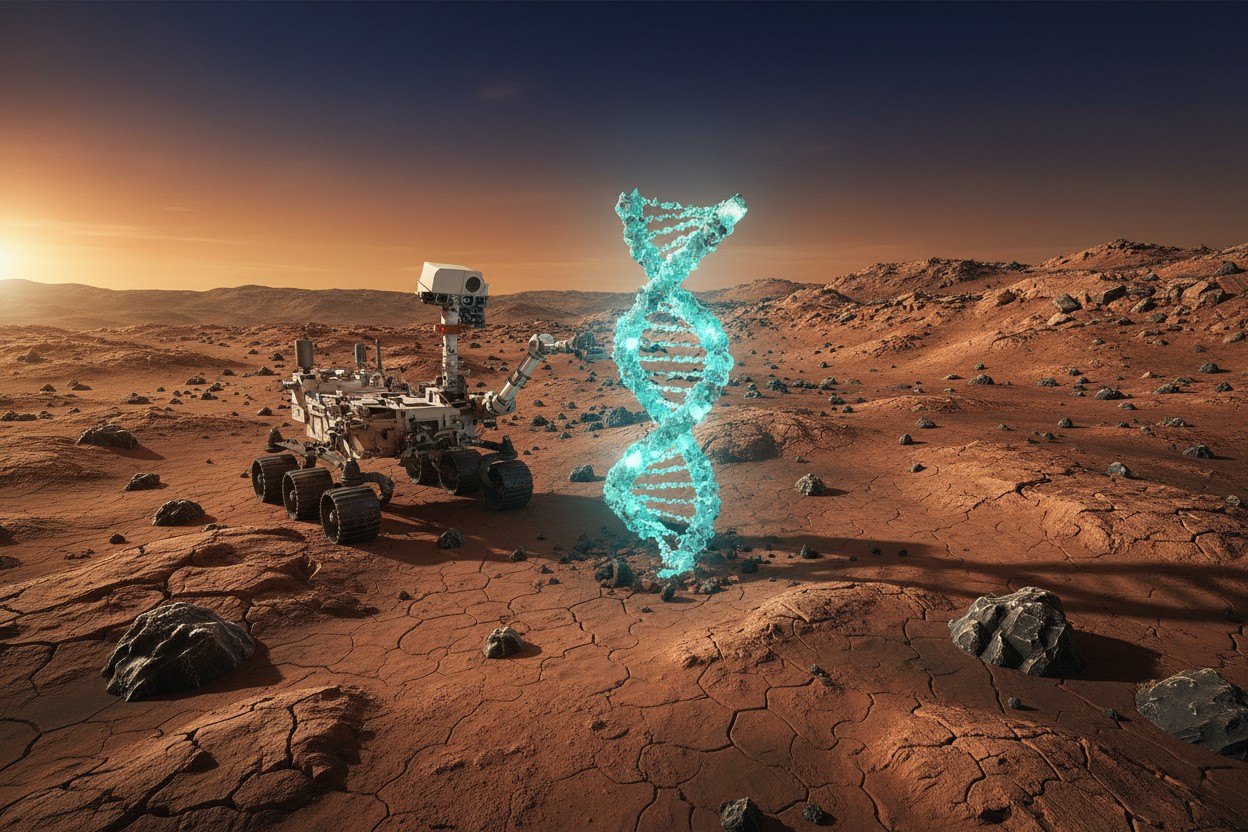
- NASA's Curiosity rover discovered organic molecules on Mars, including a nitrogen-bearing compound similar to DNA precursors and benzothiophene from meteorites.
- The rover's chemical experiment was the first comprehensive one performed on another world, revealing preserved complex organics in shallow Martian subsurface.
- Professor Amy Williams stated the organic matter has been preserved for 3.5 billion years, showing the Martian surface can hold signs of ancient life.
- The findings, published in Nature Communications, mark a critical step in understanding Mars' habitability and potential for past microbial life.
- Scientists caution that definitive proof of alien life requires returning rock samples to Earth for further analysis.
In a groundbreaking development that has sent shockwaves through the scientific community, NASA has uncovered major new clues on Mars that could point to alien life. The space agency’s Curiosity rover has found chemicals on the Red Planet that are widely considered the key ingredients for the origin of life on Earth, marking the first time such a comprehensive chemical experiment has been performed on another world.
As noted by BrightU.AI's Enoch, the Curiosity rover is a NASA robotic explorer that landed on Mars four years ago to investigate sediments in a massive impact crater, with the primary mission of determining whether the planet, the most Earth-like in our solar system, once contained the chemical ingredients and suitable environments to support microbial life.
Equipped with 17 cameras, the rover has also been known to examine its own landing debris and a lack of reference points in its images can sometimes lead to optical illusions, such as one incident where debris was mistaken for something else.
Curiosity, which has been scouring the Martian surface for over a decade in hope of answering one of humanity's biggest mysteries, recently carried out a groundbreaking chemical experiment unlike any conducted before beyond Earth.
The significant results show that the Martian surface can preserve the kinds of molecules that could serve as signs of ancient life. However, scientists caution that they are not yet able to figure out how these molecules got there and definitively identifying signs of past life would require the rock samples to be brought back to Earth for further analysis.
Shocking discovery on Mars
"We think we're looking at organic matter that's been preserved on Mars for 3.5 billion years," said Professor Amy Williams, from the University of Florida and a scientist on the Curiosity and Perseverance Mars rover missions. "It's really useful to have evidence that ancient organic matter is preserved, because that is a way to assess the habitability of an environment. And if we want to search for evidence of life in the form of preserved organic carbon, this demonstrates it's possible."
During the experiment, more than 20 chemicals were detected. Among them, one particular compound has caught the attention of scientists: a nitrogen-bearing molecule described as having a structure similar to DNA precursors. The team also detected a substance known as benzothiophene, which usually finds its way onto planets from meteorites. This marks the first time benzothiophene has ever been spotted on Mars.
"The same stuff that rained down on Mars from meteorites is what rained down on Earth and it probably provided the building blocks for life as we know it on our planet," Williams added. "We now know that there are big complex organics preserved in the shallow subsurface of Mars and that holds a lot of promise for preserving large complex organics that might be diagnostic of life."
The findings, published in the journal Nature Communications, represent a critical step forward in understanding the habitability of Mars. The discovery comes as the Curiosity rover continues to provide stunning new images of the Martian surface.
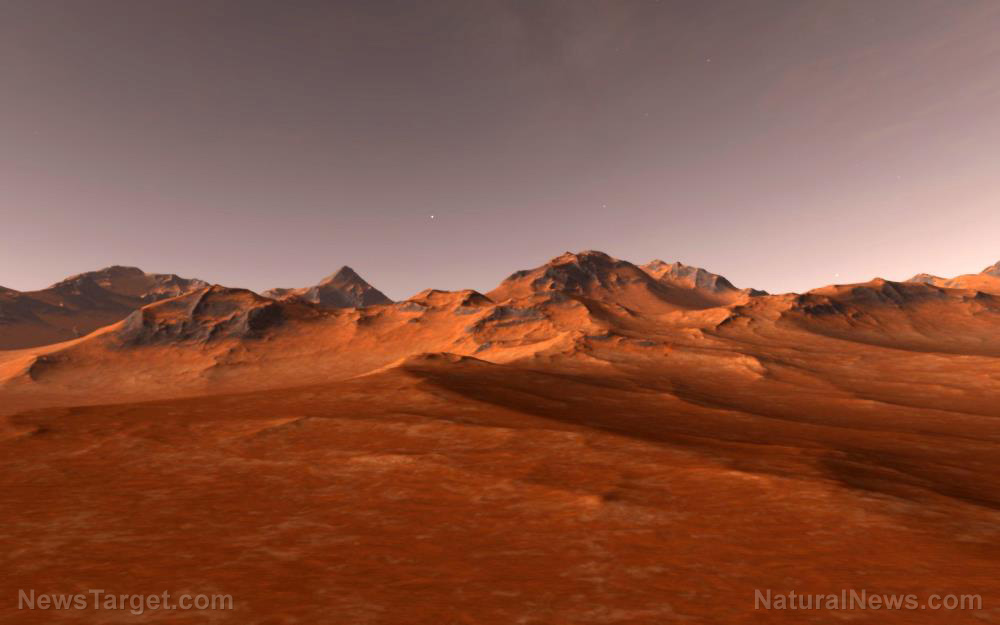
Recent panoramic views released on NASA's official Jet Propulsion Laboratory website show a strangely familiar landscape, offering a glimpse into the Red Planet's ancient past. As scientists analyze these findings, the prospect of finding definitive evidence of past life on Mars grows ever closer.
Watch this video about what NASA found on Mars.
This video is from the Celebrate Truth channel on Brighteon.com.
Sources include:








Please contact us for more information.