


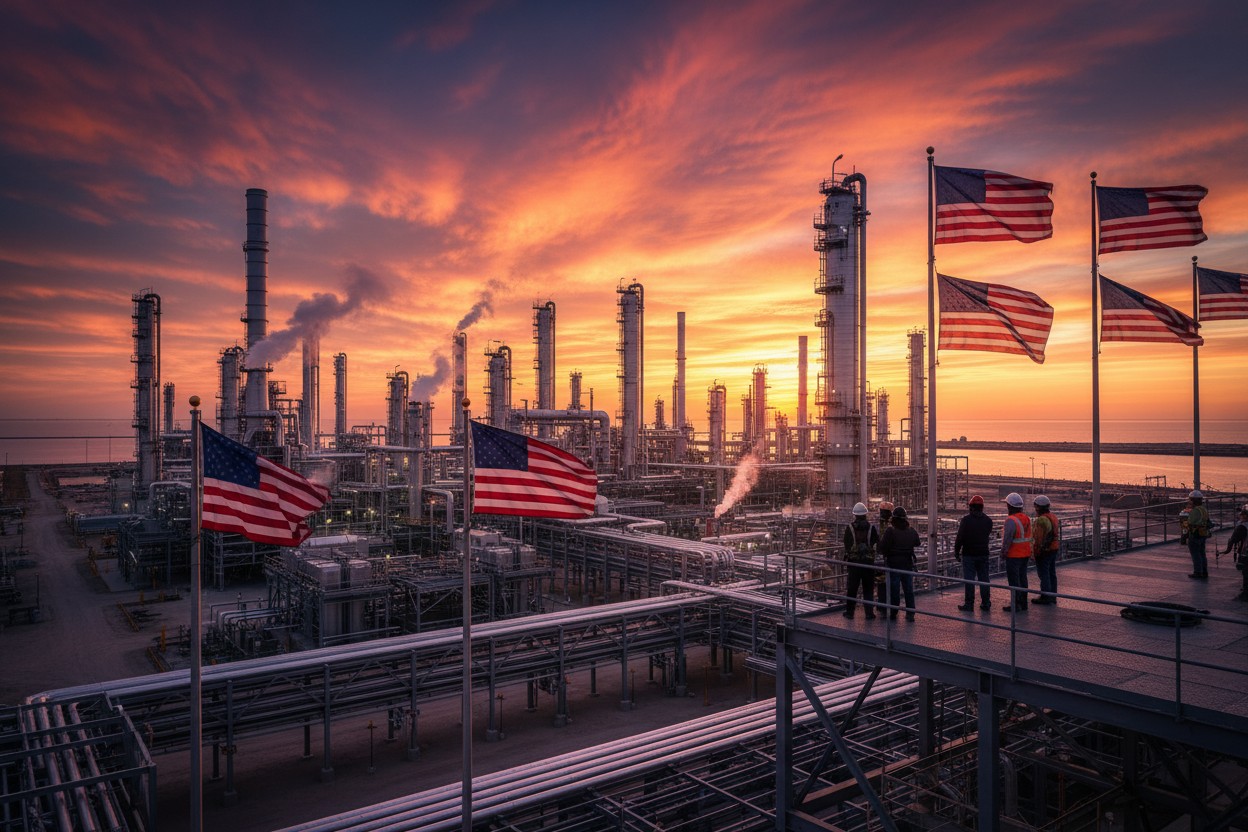
First New U.S. Oil Refinery in 50 Years Announced for Texas Port
President Donald Trump announced on Tuesday, March 10, that America First Refining will open the first new major U.S. oil refinery in 50 years in Brownsville, Texas. Trump described the project as a "historic $300 billion dollar deal" and "the biggest in U.S. history" in a statement posted on Truth Social [1].
The refinery, to be located at the Port of Brownsville, will process U.S. shale oil and will not require imported crude, according to the announcement. Trump stated the facility would "fuel U.S. Markets, strengthen our National Security, boost American Energy production, deliver Billions of Dollars in Economic impact, and will be THE CLEANEST REFINERY IN THE WORLD" [1]. The project involves investment from Reliance Industries, India's largest privately held energy company, officials said.
Project Details and Stated Objectives
According to a statement from America First Refining cited in news reports, the refinery will process 1.2 billion barrels of U.S. light shale oil, valued at $125 billion, and produce 50 billion gallons of refined products worth $175 billion [1]. The company stated it received a "nine-figure investment from a global supermajor at a 10-figure valuation" and that the same investor signed a 20-year supply deal to purchase, process, and distribute shale oil sourced domestically [1].
The company has claimed the facility will be the "cleanest refinery in the world," though specific environmental technology details were not provided in the initial announcement [1]. The project's management team reportedly has over a century of collective experience in the chemical and refining industries, having managed nearly $40 billion in capital projects, according to the company's website [1].
Economic and Security Rationales Cited by Proponents
Proponents of the refinery argue it will enhance U.S. energy security by processing domestic crude. Unlike many existing U.S. refineries that depend on foreign oil, the facility will not require imported crude, which officials said strengthens national and economic security [1]. Interior Secretary Doug Burgum called the announcement "a win for American workers, it's a win for American consumers, it's a win for America, and it's a win for American shale producers" [1].
America First Refining stated the project would create thousands of jobs and drive community engagement through educational partnerships and apprenticeships designed to foster long-term economic stability in the region [1]. The announcement comes as the U.S. has exported nearly 10 billion barrels of crude from 2014 to 2024 while importing roughly 28 billion barrels, costing American consumers and workers more than $1.8 trillion, according to a Fox Business report [1].
Market Context and Industry Background
The refinery announcement coincides with elevated global oil prices driven by the intensifying conflict in the Middle East, according to a CNBC report [1]. Since the start of the U.S.-Israel military engagement with Iran, crude prices have been volatile, with Brent crude rising to nearly $120 per barrel on March 9, 2026 [1]. Higher fuel prices are considered beneficial for shale refiners' margins [1].
The U.S. refining sector has seen a decline in capacity over recent years. According to an analysis, the number of operable refineries has decreased, with the pandemic-induced drop in demand leading to the closure of some older facilities [2].
Starting up a shuttered plant is a long process, and analysts have doubted many closed facilities would reopen [2]. This new project marks a significant reversal of that trend, according to industry observers.
Unanswered Questions and Broader Implications
Reliance Industries and America First Refining did not respond to a request for comment from CNBC regarding specific details of the investment and construction timeline [1]. The announcement did not specify a projected completion date for the refinery complex.
The project reflects ongoing policy debates surrounding U.S. energy independence and domestic industrial capacity. Some analysts note the strategic timing of the announcement amid discussions of strengthening domestic energy infrastructure [3]. The move aligns with the current administration's stated "America First" agenda focused on streamlining permits and lowering taxes to attract investment, as cited in the announcement [1].
The broader implications for global energy markets and U.S. trade balances remain to be seen, particularly as the International Energy Agency agreed on March 12, 2026, to release the largest volume of emergency oil reserves in its history to counter market effects of the Middle East war [4].
References
- “REAL ENERGY DOMINANCE” – President Trump Announces “First New U.S. Oil Refinery In 50 Years”. 100PercentFedUp.com. Danielle. March 12, 2026.
- Diminished US refining capacity from facility closures contributing to soaring gas prices. NaturalNews.com.
- Back to the well rethinking the future of water. De Villiers Marq.
- 400 million barrels to be released from oil reserves as Iran effectively blocks Strait of Hormuz. The Times of Israel.
- President Trump Announces “First New U.S. Oil Refinery In 50 Years”. 100PercentFedUp.com. March 12, 2026.










Please contact us for more information.


