
Key points:
- Artificial intelligence has become a defining political issue for the 2026 midterms, with sharply divided narratives predicting either economic catastrophe or unprecedented growth.
- Many believe AI has already reached its peak of usefulness, and the "AI bubble" is destined to burst.
- Others believe AI is just beginning to take off, and will lead to decentralized systems that empower individuals.
- Government regulations may hold Big Tech companies accountable for abusing power, but may also stifle innovation and hinder the individual's benefit.
- A well-funded network of left-leaning tech donors and advocacy groups is actively promoting concerns about mass AI-driven job displacement, a strategy critics label a deliberate influence operation to advance policies like Universal Basic Income.
- Pro-innovation political action committees, backed by major AI industry figures, are mobilizing with equal financial force to oppose heavy regulation and promote an accelerationist view of AI development.
- Beyond job loss, the debate encompasses local battles over data center costs, national security concerns, and the philosophical movement of Effective Altruism, which is now a significant funder in the AI policy arena.
- The speed of technological advancement itself threatens to outpace the political and regulatory dialogue, with some experts warning that governance frameworks are becoming obsolete even as they are drafted.
AI, automation, and job displacement intensifying
The political discourse around AI is saturated with staggering numbers and dire predictions. A Senate report prepared for Senator Bernie Sanders warns of nearly 100 million jobs affected by automation within a decade. AI executives themselves sound the alarm; Anthropic CEO Dario Amodei projects disruption for half of entry-level white-collar jobs in just one to five years, while OpenAI’s Sam Altman has stated plainly that many professions could simply "go away." This drumbeat of disruption fuels a specific political agenda. Critics, like former Trump adviser David Sacks, argue this is by design. He describes a "tried and true tactic" of using fear to expand government power, pointing to an "elaborate network of front organizations" funded by what he calls "committed leftists." This network, he suggests, is less about analyzing economic trends and more about steering public opinion toward pre-ordained solutions.
Financing this ideological war is a river of money flowing into new political entities. On one side, the pro-innovation Super PAC "Leading the Future" has raised $125 million with support from OpenAI president Greg Brockman. On the other, the advocacy group Public First has gathered $50 million, including a $20 million donation from Anthropic, explicitly to lobby for AI regulation. This financial arms race reveals how the future of AI is being legislated not just in Congress, but in the competitive fundraising emails and donor strategies that will shape the 2026 electoral landscape. Adding a complex layer is the influence of Effective Altruism, a philanthropic movement focused on existential risks. Through organizations like Open Philanthropy, which has directed over $4 billion in grants, it has become a major funder of AI safety research. Its connections run deep into the industry; a co-founder is married to an Anthropic co-founder, blending philosophy, finance, and corporate interests in a way that fuels accusations of a coordinated, elite project.
The tangible costs of an intangible future
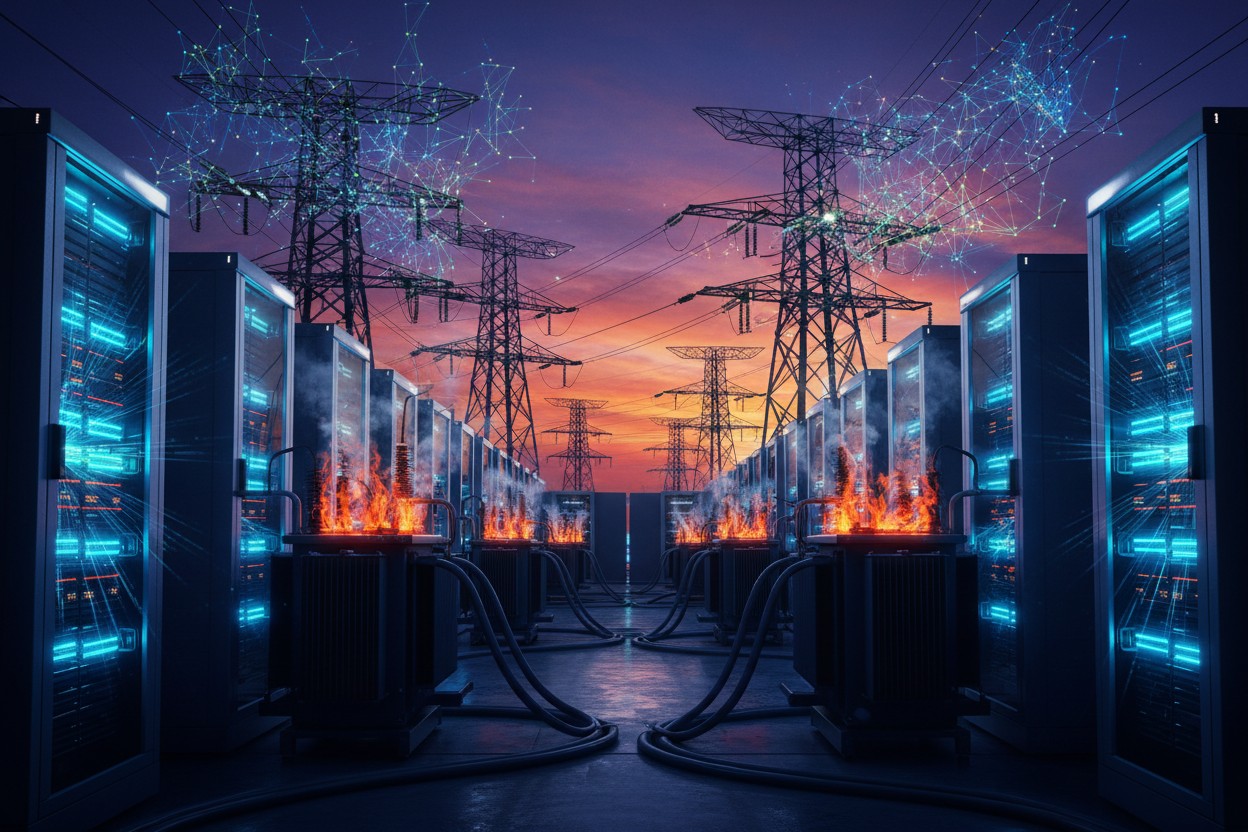
While the debate often soars into the realm of high theory and future speculation, the consequences are already felt in tangible, local ways. The infrastructure required to power the AI revolution—vast data centers—is sparking community rebellions over skyrocketing electricity and water costs. The Trump administration has taken note, with senior officials promising to ensure these tech giants bear the full burden of their infrastructure demands. This tension between national ambition and local cost creates a potent political fault line, especially for working-class voters who hear promises of a glittering future while facing higher utility bills today.
Simultaneously, the national security state is entering the fray. The Pentagon’s consideration of labeling Anthropic a supply chain risk underscores the strategic anxiety over who controls foundational AI models, especially regarding military applications. This moves the debate from economic fear to sovereign fear, questioning whether the companies steering AI development share the strategic interests of the nation.
A race against the clock we cannot see
Perhaps the most unnerving aspect of the entire debate is the creeping sense that politics, with its slow cycles of elections and legislation, is inherently ill-equipped to handle its subject. As influential commentator Peter Diamandis noted, if predictions of AI’s rapid, recursive self-improvement by 2026 hold true, then every governance proposal on the table today is like "building brakes for a car that’s about to become a rocket." This sentiment echoes a broader historical pattern where technological evolution consistently outpaces civic understanding and regulatory response, from the dawn of the industrial age to the rise of the internet.
The 2026 elections, therefore, represent more than a typical midterm referendum. They are becoming a collective deep breath before a leap into the unknown. Voters will be asked to choose between narratives of fear and promise, between preemptive restraint and unfettered acceleration, all while navigating a landscape shaped by immense, opaque financial networks and a technology that evolves daily. The outcome will determine more than which party controls committees; it will set the trajectory for who governs the minds we are creating, and in turn, how those minds will govern us.
Sources include:










Please contact us for more information.