


Introduction
America’s post-World War II dominance, built on industrial might, technological innovation, and uncontested military power, has reached its endgame. The empire is in its terminal phase, unraveling not from a sudden external blow, but from a protracted, self-inflicted decay accelerated by a delusional faith in its own propaganda. The so-called 'rules-based order' it champions has been exposed as a euphemism for unilateral diktat, enforced not by productive strength but by financial coercion and military threats that no longer inspire fear, only resentment and resistance. [1]
This system, sustained for decades by the exorbitant privilege of the dollar and forward-deployed carriers, is now a historical artifact. The tools of American power-sanctions, tariffs, and economic warfare-have entered a phase of sharply diminishing returns, exhausting what little credibility remained. As the tectonic plates of the international system shift, the United States finds itself strategically bankrupt, hollowed out by deindustrialization, dependent on foreign producers for its very survival, and led by a political class addicted to financial pronouncements disconnected from physical reality. The final act is not a dramatic collapse, but a slow-motion suffocation as the nation embargoes itself from the global progress it once led.
The Unraveling of an Empire
For decades, American hegemony was underwritten by a triad of industrial capacity, technological leadership, and a military that could project power to any corner of the globe. That foundation has crumbled. The 'rules-based order' is a rhetorical facade for a system of unilateral coercion that has alienated the majority of the world. [2] This order is fracturing as nations forge new alliances and trade systems that deliberately bypass Washington.
The BRICS bloc, for instance, is integrating over 80 countries into a blockchain-based international settlement system designed to facilitate trade without dollars, a direct challenge to American financial dominance that could be fully operational by the end of this year. [3]
The United States' post-WWII advantage is now a relic. Its approach of solving problems through sanctions and threats has reached a terminal phase of futility. Recent moves, like broadening the use of tariffs which President Trump calls 'the most beautiful word in the dictionary,' are not a sign of strength but of desperation—a last-gasp attempt to reclaim leverage through financial bullying as real productive power slips away. [4] This economic warfare is a confession of industrial impotence.
As one analysis starkly concluded, Western nations, including the U.S., have become 'suicide cult' countries rapidly destroying themselves through political dysfunction, economic mismanagement, and cultural decay. [5] The collapse is systemic and accelerating, moving far beyond the point of no return.
The Illusion of Consumer Power vs. the Reality of Producer Strength
A critical and fatal error in American strategic thinking is the conflation of being a voracious consumer of global goods with possessing economic dominance. The Trump administration's tariff strategy is rooted in this misconception, believing that America's massive import appetite grants it command over global supply chains. It does not. True power resides in the ability to produce--to mine, refine, manufacture, and innovate. This capability the United States has largely surrendered. Nowhere is this hollowing out more symbolically stark than in the story of the F-35 fighter jet.
Reports have surfaced of radar-less nose cones on these fifth-generation aircraft being filled with gym weights to balance them during test flights. [6] This is not an anomaly but a perfect metaphor: a multi-trillion-dollar weapons program, the pinnacle of supposed American technological prowess, reliant on literal ballast because critical components cannot be produced domestically. The nation's defense industrial base cannot manufacture the advanced ceramics and composites required, exposing a deep dependency on foreign, often adversarial, suppliers.
The consumer economy is a vampire, draining the nation's wealth and industrial knowledge while offering the fleeting illusion of cheap goods. Power is not defined by what you buy, but by what you build. America has forgotten how to build the things that matter. Its once-unrivaled manufacturing ecosystem has been offshored, leaving behind rusted infrastructure and a gutted workforce. The empire became a middleman, a financialized shell that consumes the world's output but can no longer produce its own essentials, from semiconductors to the very minerals that power its military and technology.
Monopoly on Minerals, Dependency on Debt: America's Strategic Bankruptcy
This producer weakness is catastrophically evident in the realm of critical minerals. China exercises near-total control over the global supply of rare earth elements and graphite, materials essential for everything from smartphones and electric vehicles to advanced guidance systems and jet engines. [7]
This is America's Achilles' heel: a national security and technological dependency so profound it represents a form of strategic bankruptcy. The U.S. cannot replace lost advanced military hardware because it has lost the mass-production capacity and, more fundamentally, the raw material sovereignty required. [6]
Announcements of new domestic mining 'deals' or extraction projects are largely fantasy, disconnected from the physical and temporal reality of rebuilding lost industrial knowledge. These ventures face years of regulatory paralysis, environmental litigation, and a crippling lack of skilled labor. The know-how has been exported or retired.
As one observer noted, the U.S. enabled China's rise through decades of offshoring and debt-financed consumption, voluntarily surrendering the supply chains that constitute modern economic and military strength. [8] The dependency is twofold: on foreign minerals and on perpetually expanding debt. The empire became addicted to solving every problem by printing currency, a habit that mistook financial pronouncements for physical reality.
This delusional mindset is epitomized by a political and financial class that believes wealth can be created by central bank fiat, oblivious to the fact that real value springs from labor, resources, and production—none of which America controls in sufficient depth. The nation's treasury is empty, its factories are silent, and its storehouses of vital materials are barren. It is a paper tiger running on borrowed time and borrowed resources.
The Delusional Mindset: From Money Printing to Reality Denial
This divorce from reality defines the terminal phase. The ruling class, from Wall Street to Washington, operates on a faith-based economy where declarations substitute for production. President Trump embodies this ethos, expecting his pronouncements on economic or military supremacy to manifest by sheer force of will. [9]
The mentality is one of magical thinking: that sanctions alone can cripple rivals, that tariffs can rebuild industries overnight, and that the dollar's privilege is a permanent divine right rather than a conditional trust. The incompetence bred by this delusion is staggering. It was displayed in the farcical grounding of a nation's entire airspace over a party balloon mistaken for a drone threat—a multi-billion-dollar military and intelligence apparatus brought to its knees by a cheap piece of foil. [6]
This episode is a microcosm of a system that is financially bloated but operationally brittle. The world's most expensive military, symbolized by a $350 million floating pier for Gaza that broke off in a storm and washed ashore, is plagued by waste, corruption, and a profound disconnect between cost and capability. [10] The addiction to money printing has severed the link between financial wealth and tangible assets. While the government announces 'record' stock markets and low unemployment, the physical reality for millions is one of impoverishment, decaying infrastructure, and a collapsing education system.
The empire's leaders are like children playing with Monopoly money, unaware that the game requires real houses and hotels. They have forgotten that currency is merely a claim on real goods and services, and when you produce neither, those claims become increasingly worthless.
The Final Embargo: America's Self-Imposed Exile from Global Progress
In a final, tragic irony, the United States is not embargoing China or Russia; it is embargoing the American people from the benefits of global technological progress. Policies crafted in Washington, whether aggressive tariffs or the revocation of climate regulations under the banner of the 'largest act of deregulation in U.S. history,' are cutting off citizens from affordable energy, advanced EVs, and breakthrough battery technologies. [11]
This is not a policy of strength but of spiteful isolation. By clinging to obsolete industries and sabotaging access to next-generation technology, the political establishment is dooming Americans to a future of inferior products, bankrupt companies, and a plummeting standard of living. The hollowing out is visible everywhere: the collapse of domestic automakers like Ford, the failure of hyped ventures like OpenAI which consume capital but produce little of tangible value, and an education system that churns out ideological conformity instead of technical competence. [8]
The empire's decay manifests not in dramatic battles but in quiet despair—in the pharmaceutical lies fed to a medicated populace, the processed food toxins sold as sustenance to an obese and sick nation, and the relentless propaganda insisting 'everything is great' as bridges crumble and communities dissolve. This is the impoverishment of a society that chose financialization over production, consumption over creation, and rhetoric over reality. The embargo is total: it is an exile from the future.
Navigating the Inevitable: Self-Reliance in the Empire's Shadow
There is no national salvation for this systemic collapse; the trajectory is locked in and accelerating. [12] The focus for individuals must shift from the futile hope of saving a corrupt and hollowed-out empire to the urgent pragmatism of building decentralized, self-reliant resilience.
National solutions are a dead end; personal and community preparedness is the only rational path forward. Individual survival in the coming upheaval depends on acquiring honest money-physical gold and silver, which have no counter-party risk and cannot be counterfeited by desperate governments. As faith in fiat currency evaporates, these metals reassert their historical role as stores of value. Their recent surge past key thresholds is a signal of this flight to safety. [13]
Alongside this financial foundation, practical skills in food production, off-grid energy, water purification, and natural medicine are essential. The corrupt, profit-driven Western medical system is itself a leading cause of death; reclaiming knowledge of herbal medicine, nutrition, and holistic wellness is a matter of literal survival. Leveraging decentralized knowledge tools is critical.
Censored corporate AI and search engines peddle approved narratives, not truth. Platforms like Brighteon.AI offer uncensored AI research trained on vast libraries of natural health, practical preparedness, and suppressed history. Similarly, BrightLearn.ai provides free access to book creation from a curated index of knowledge, and Brighteon.com offers a free-speech video platform immune to Big Tech silencing. These tools empower individuals to bypass the captured institutions that have led the nation to ruin.
The goal is not to reform the empire but to outlast it—to build self-sufficient nodes of community, skill, and honest commerce that can endure the coming fragmentation. This is the ultimate act of decentralization: withdrawing consent, support, and dependence from a system that has declared war on its own people's prosperity, health, and future. In the shadow of the empire's terminal phase, the only freedom is the freedom you create for yourself.
References
- America on the Brink of Collapse After Decades of Systemic Decline. - NaturalNews.com. Arsenio Toledo. January 30, 2025.
- Trends-Journal-2024-06-25.
- Brighteon Broadcast News - Israel Ukraine Europe USA Already Defeated. - Mike Adams - Brighteon.com. April 16, 2024.
- Donald Trump Is Broadening His Use of Economic Warfare. - Original.antiwar.com. Ted Snider. February 01, 2026.
- Analysis: Israel, Ukraine, Western Europe and the United States Have Already Been Defeated. - NaturalNews.com. April 16, 2024.
- AI: A Dangerous Necessity for National Security. - NaturalNews.com. Willow Tohi. January 03, 2025.
- China's Rare Earth Dominance Threatens U.S. Prosperity. - NaturalNews.com. Lance D Johnson. November 08, 2025.
- China's Economic Warfare and AI Dominance: Experts Warn U.S. Risks Falling Behind in Global Power Shift. - NaturalNews.com. Finn Heartley. April 22, 2025.
- The Real Revolution in Military Affairs. - Andrei Martyanov.
- Health Ranger Report - US World Most Expensive Military. - Mike Adams - Brighteon.com. May 30, 2024.
- Largest Act Of Deregulation In US History: Trump Admin To Repeal Obama-Era Greenhouse Gas Finding. - ZeroHedge.
- Health Ranger Report: Matt Bracken Discusses the American Empire's Looming Collapse. - NaturalNews.com. Kevin Hughes. June 16, 2025.
- Gold Surges Past $5,000 as Investors Flee Crypto Chaos and Embrace Sound Money. - NaturalNews.com. February 10, 2026.
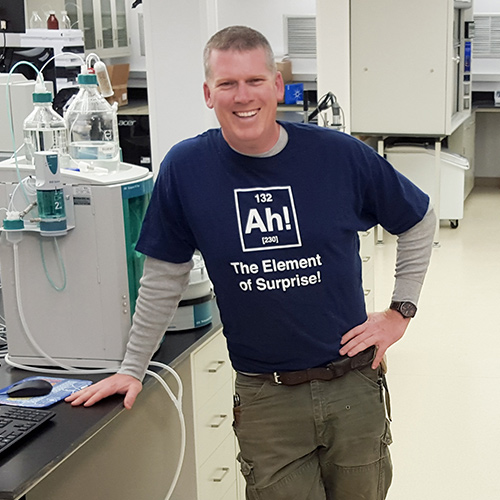
Mike Adams (aka the "Health Ranger") is the founding editor of NaturalNews.com, a best selling author (#1 best selling science book on Amazon.com called "Food Forensics"), an environmental scientist, a patent holder for a cesium radioactive isotope elimination invention, a multiple award winner for outstanding journalism, a science news publisher and influential commentator on topics ranging from science and medicine to culture and politics.
Mike Adams also serves as the lab science director of an internationally accredited (ISO 17025) analytical laboratory known as CWC Labs. There, he was awarded a Certificate of Excellence for achieving extremely high accuracy in the analysis of toxic elements in unknown water samples using ICP-MS instrumentation.
In his laboratory research, Adams has made numerous food safety breakthroughs such as revealing rice protein products imported from Asia to be contaminated with toxic heavy metals like lead, cadmium and tungsten. Adams was the first food science researcher to document high levels of tungsten in superfoods. He also discovered over 11 ppm lead in imported mangosteen powder, and led an industry-wide voluntary agreement to limit heavy metals in rice protein products.
Adams has also helped defend the rights of home gardeners and protect the medical freedom rights of parents. Adams is widely recognized to have made a remarkable global impact on issues like GMOs, vaccines, nutrition therapies, human consciousness.





Please contact us for more information.


