




New research extends understanding of the positive health effects of expressive writing (press release)
 Wednesday, August 31, 2005 Wednesday, August 31, 2005by Mike Adams, the Health Ranger Editor of NaturalNews.com (See all articles...) Tags: health news, Natural News, nutrition |
- The REAL FAKE NEWS exposed: '97% of scientists agree on climate change' is an engineered hoax... here's what the media never told you
- Vaccine fraud exposed: Measles and mumps making a huge comeback because vaccines are designed to fail, say Merck virologists
- Synthetic vitamin C, or ascorbic acid, kills beneficial probiotic bacteria in the gut
- Natural remedies help lymphedema
- The United Nations 2030 Agenda decoded: It's a blueprint for the global enslavement of humanity under the boot of corporate masters
- Glyphosate disrupts DNA function, causing 'medical chaos' in the form of multiple diseases including Alzheimer's, Parkinson's, say researchers
- Pro-vaccine shill Dr. David Gorski, linked to cancer fraudster, in cahoots with pharma to develop lucrative autism drug
- A High-Carbohydrate Diet With Added Sugars Doubles Your Risk of Breast Cancer, Says New Research
- How to survive a flu pandemic by strengthening your immune system now
- Forget Filling Cavities: Regrow Your Teeth Instead
- Total agrochemical domination: Nearly 100% of corn grown in America is doused with bee-killing neonicotinoid pesticides
- What Big Pharma doesn't want you to know about bromelain
- The aloe vera miracle: A natural medicine for cancer, cholesterol, diabetes, inflammation, IBS, and other health conditions
- Marijuana cannabinoids found to help combat autism
- Untested vaccines causing new wave of polio-like paralysis across India
- Insect cuisine coming soon to a store near you - Can bugs feed the world?
- Shock findings in new GMO study: Rats fed lifetime of GM corn grow horrifying tumors, 70% of females die early
- Gentle Hair Rinses and Treatments Help Oily, Limp Hair
- The REAL FAKE NEWS exposed: '97% of scientists agree on climate change' is an engineered hoax... here's what the media never told you
- Vaccine fraud exposed: Measles and mumps making a huge comeback because vaccines are designed to fail, say Merck virologists
- Spirulina truly is an exceptional food in every imaginable way
- Vitamin B-12 warning: Avoid cyanocobalamin, take only methylcobalamin
- The United Nations 2030 Agenda decoded: It's a blueprint for the global enslavement of humanity under the boot of corporate masters
- Sugar takes on high fructose corn syrup in high stakes legal battle to see which is most unhealthy
- Measles vaccine far more dangerous than measles itself
- Natural remedies help lymphedema
- Secrets of soil nutrition: Why the minerals in soil determine the success or failure of foods, health and civilization
- Plastic surgeon sets patient on fire during breast augmentation procedure, then blames burn marks on allergic reaction
- Bad news for tattoos - Many tattoo inks contain dangerous heavy metals, phthalates and hydrocarbons
- Synthetic vitamin C, or ascorbic acid, kills beneficial probiotic bacteria in the gut
- Beat cancer with 35% hydrogen peroxide
- Six natural remedies for lowering blood pressure fast
- Eighteen Overlooked Symptoms of Adrenal Fatigue
- How to Detox Fluorides from Your Body
- Forget Filling Cavities: Regrow Your Teeth Instead
- Glyphosate disrupts DNA function, causing 'medical chaos' in the form of multiple diseases including Alzheimer's, Parkinson's, say researchers
- The REAL FAKE NEWS exposed: '97% of scientists agree on climate change' is an engineered hoax... here's what the media never told you
- Bullet proof immune system - how to not get a cold ever
- Oregon man convicted of collecting rainwater on his own property surrenders and begins serving 30-day jail sentence
- The best and worst forms of magnesium to take as a supplement
- The United Nations 2030 Agenda decoded: It's a blueprint for the global enslavement of humanity under the boot of corporate masters
- Dandelion root extract found to kill leukemia cells, prostate cancer cells and chemo-resistant melanoma
- What's really in vaccines? Proof of MSG, formaldehyde, aluminum and mercury
- Vaccine fraud exposed: Measles and mumps making a huge comeback because vaccines are designed to fail, say Merck virologists
- Forget Filling Cavities: Regrow Your Teeth Instead
- Red Cabbage Found to Contain 36 Anti-Cancer Anthocyanins
- Beat cancer with 35% hydrogen peroxide
- The missing link - How to beat cancer with garlic
- The aloe vera miracle: A natural medicine for cancer, cholesterol, diabetes, inflammation, IBS, and other health conditions
- Measles vaccine far more dangerous than measles itself
- HPV and Hepatitis B vaccines do not prevent cervical cancer and liver disease
- Early warning signs of cancer that cannot be ignored
- Prevent artery hardening and calcium buildup with aged garlic
- Six little-known natural remedies for tinnitus
- Newly released JFK files reveal Pentagon's role in creating Lyme disease and covid in the same lab
- Eleven days before Iran bombed Tel Aviv, my microscope revealed haunting images of EXACTLY what would happen
- Morphic resonance “remote viewing” reveals iconic Middle East images of stealth bombers, a falcon and a one-horned ram
- Mike Adams releases country western hit single: Goin’ Back in Time is Comin’ Home
- DECENTRALIZED SPIRITUALITY and the true teachings of Christ: Overcoming the censorship, threats and lies of organized religion to truly know God and the Universal Christ
- EPA advisor admits the agency is funneling billions to climate groups ahead of Trump’s return to White House
- HEALTH SECRETS: How to Instantly Block MSG Toxicity Using Natural Substances (and the secret of Methylene Blue)
- The Health Ranger releases “Vaccine Zombie” song and music video, using AI-animated zombies for the music video
- BOMBSHELL: Internal Pfizer documents exposed and reveal at least 16 PERCENT of their mRNA vaccine "adverse events" are REPRODUCTIVE DISORDERS
- Amazing microscopy photos reveal how freezing crystals attempt to mimic electronic structures they are touching
- The Coming Gold Revaluation: Strategic Financial Realignment in an Era of Dollar Collapse
- The AI Data Center Wars Have Begun… Farms, Water and Electricity is Stripped from Humans to Power the Machines
- Urgent Wake-Up Call: The Coming AI Robot Wars and the Great Human Unity
- BOMBSHELL: DNA testing kits are a SCAM to develop ethnic-specific bioweapons
- BOMBSHELL: Covid-19 mRNA nanoparticles EMIT LIGHT SIGNALS that communicate MAC addresses used for self-assembly inside the blood vessels
- The War on Light: How Governments and Big Pharma Keep You Sick By Blocking Healing Photons
- Aerosolized bioweapons? Strange “diploid biomasses” falling out of the sky in Florida captured under the microscope
- RFK Jr. clears key hurdle: Sen. Susan Collins backs controversial HHS nominee, signaling a new era for health policy





This study consists of two parts: the original study and a reanalysis of data. The original study was conducted by Dr. Anna Graybeal, who recruited 86 college undergraduates whose parents were divorced and randomly assigned them to a control or experimental group. The control group was instructed to write on two occasions, 30 minutes each, about time management. The experimental group was asked to also write for a total of 60 minutes but about their thoughts and feeling about their parents' divorce. For both groups, pre-and post-writing interviews about stressful experiences of the divorce were conducted to assess the participants' reactivity to provoked stress. To measure health improvements a comprehensive battery of tests were used, including measures of physiological arousal (such as heart rate, skin conductance, and blood oxygen level), self reports of emotional upset (such as questionnaires and mood scales), measures of physical and psychological health (using health center data, self reports of illness, and symptom checklist), and measure of cognition (working memory tests).
The original study hypothesized that those students given the expressive writing assignment – to write about their thoughts and feelings about their parent's divorce – would reap health improvements while those asked to write about a non-affective subject, time management, would not.
The hypothesis proved wrong and a puzzle emerged. Results showed that both sets of students reaped health improvements after the writing exercise--they were less distressed, improved their mean performance on the working memory task, and exhibited fewer psychological symptoms. The authors rightly speculated that the post-writing improvement of the control group was attributable to the pre-writing interview, which prompted all participants to process issues concerning their parents' divorce. Thus both writing groups had in effect been primed to process their emotions--the experimental group explicitly, and the control group implicitly.
The texts of both the writing assignments and the in-person interviews were then reanalyzed using the SSWC (the Sundararajan-Schubert Word Count program), a language analysis program developed by Dr. Sundrarajan and her colleague Lenhart Schubert, Professor of Computer Science at the University of Rochester. This computer program works by pattern matching which allows it to process syntax, parts of speech, and negation, and to count occurrences of words and phrases in a dictionary of close to 2000 entries. Secondly, it identifies 15 categories of language use as indexes of different information processing strategies, such as "emotion immersion", "emotion distancing", "focus on affect", "high self focus", etc.
The results of the language analysis showed that both the experimental and control groups seemed to be similarly aroused, and produced texts of comparable length. Other than that, the two groups differed on practically all of the 15 categories of language use. The experimental group used more emotionally expressive categories as well as emotion distancing categories, and produced a higher percentage of the sum total of categories used than the control group, who in contrast were more relaxed, wrote more about bodily sensations (such as "tiredness") and the self.
A few information-processing strategies showed the same effects across writing conditions, for instance, emotion distancing strategies were found to be beneficial, and high self focus detrimental, for both groups. But, most strategies of emotion expression were beneficial--or not, depending on the demand characteristics of the writing condition. Thus with the experimental group who were encouraged to express their emotions, deliberate processing of emotions was found to be conducive to post-writing improvement. For the control group, however, who wrote about time management, non-conscious processing of emotions was found to be beneficial.
These results show that the effects of affective expressions are not fixed, but rather are dependent on the writer's mental context at the time," says lead researcher Dr. Sundararajan. "This study suggests a new direction for research on expressive writing. The research question needs to shift from whether to how. We can now look at the health benefits of different types of language use in combination with different contexts of writing to learn more about the link between language use and health."

)

Health news at FETCH.news
Get independent news alerts on natural cures, food lab tests, cannabis medicine, science, robotics, drones, privacy and more.
 About the author:Mike Adams (aka the "Health Ranger") is a best selling author (#1 best selling science book on Amazon.com) and a globally recognized scientific researcher in clean foods. He serves as the founding editor of NaturalNews.com and the lab science director of an internationally accredited (ISO 17025) analytical laboratory known as CWC Labs. There, he was awarded a Certificate of Excellence for achieving extremely high accuracy in the analysis of toxic elements in unknown water samples using ICP-MS instrumentation. Adams is also highly proficient in running liquid chromatography, ion chromatography and mass spectrometry time-of-flight analytical instrumentation.
Adams is a person of color whose ancestors include Africans and Native American Indians. He's also of Native American heritage, which he credits as inspiring his "Health Ranger" passion for protecting life and nature against the destruction caused by chemicals, heavy metals and other forms of pollution.
Adams is the founder and publisher of the open source science journal Natural Science Journal, the author of numerous peer-reviewed science papers published by the journal, and the author of the world's first book that published ICP-MS heavy metals analysis results for foods, dietary supplements, pet food, spices and fast food. The book is entitled Food Forensics and is published by BenBella Books.
In his laboratory research, Adams has made numerous food safety breakthroughs such as revealing rice protein products imported from Asia to be contaminated with toxic heavy metals like lead, cadmium and tungsten. Adams was the first food science researcher to document high levels of tungsten in superfoods. He also discovered over 11 ppm lead in imported mangosteen powder, and led an industry-wide voluntary agreement to limit heavy metals in rice protein products.
In addition to his lab work, Adams is also the (non-paid) executive director of the non-profit Consumer Wellness Center (CWC), an organization that redirects 100% of its donations receipts to grant programs that teach children and women how to grow their own food or vastly improve their nutrition. Through the non-profit CWC, Adams also launched Nutrition Rescue, a program that donates essential vitamins to people in need. Click here to see some of the CWC success stories.
With a background in science and software technology, Adams is the original founder of the email newsletter technology company known as Arial Software. Using his technical experience combined with his love for natural health, Adams developed and deployed the content management system currently driving NaturalNews.com. He also engineered the high-level statistical algorithms that power SCIENCE.naturalnews.com, a massive research resource featuring over 10 million scientific studies.
Adams is well known for his incredibly popular consumer activism video blowing the lid on fake blueberries used throughout the food supply. He has also exposed "strange fibers" found in Chicken McNuggets, fake academic credentials of so-called health "gurus," dangerous "detox" products imported as battery acid and sold for oral consumption, fake acai berry scams, the California raw milk raids, the vaccine research fraud revealed by industry whistleblowers and many other topics.
Adams has also helped defend the rights of home gardeners and protect the medical freedom rights of parents. Adams is widely recognized to have made a remarkable global impact on issues like GMOs, vaccines, nutrition therapies, human consciousness.
In addition to his activism, Adams is an accomplished musician who has released over a dozen popular songs covering a variety of activism topics.
Click here to read a more detailed bio on Mike Adams, the Health Ranger, at HealthRanger.com.

Take Action: Support Natural News by linking to this article from your website
Permalink to this article:
Embed article link: (copy HTML code below):
Reprinting this article:
Non-commercial use OK, cite NaturalNews.com with clickable link.
Follow Natural News on Facebook, Twitter, Google Plus, and Pinterest

Science News & Studies

Medicine News and Information

Food News & Studies

Health News & Studies

Herbs News & Information

Pollution News & Studies

Cancer News & Studies

Climate News & Studies

Survival News & Information

Gear News & Information

News covering technology, stocks, hackers, and more




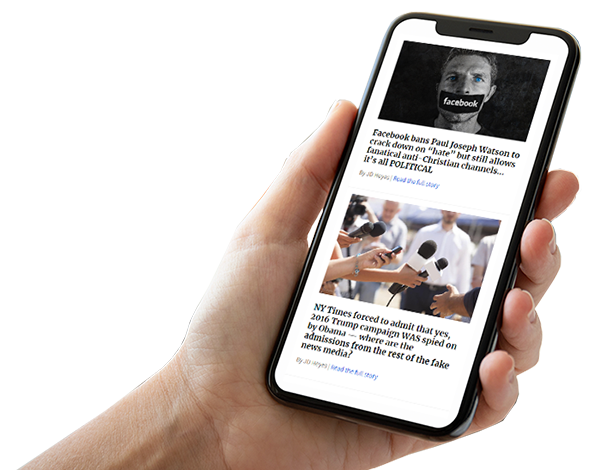

"Big Tech and mainstream media are constantly trying to silence the independent voices that dare to bring you the truth about toxic food ingredients, dangerous medications and the failed, fraudulent science of the profit-driven medical establishment.
Email is one of the best ways to make sure you stay informed, without the censorship of the tech giants (Google, Apple, Facebook, Twitter, YouTube, etc.). Stay informed and you'll even likely learn information that may help save your own life."
–The Health Ranger, Mike Adams